

This article is part of a sponsored series brought to you by IDS Research & Development, Incorporated. View Series
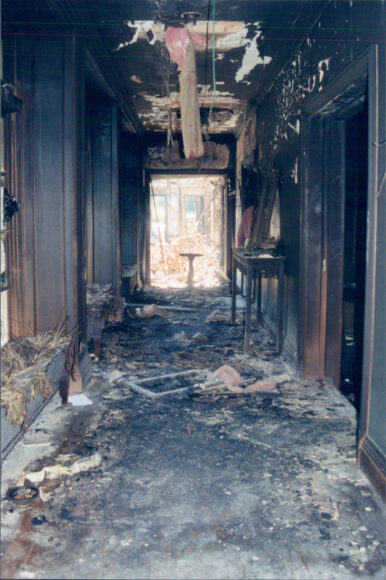 Universally, regardless of who manufactures the Fire Alarm Equipment or who the responsible Alarm Contractor of record is for the system, they are required to comply with NFPA 72.
Following NFPA 72 Guidelines
Against the foregoing backdrop, the most authoritative treatise in the country and around the world on Fire Protection and Fire Alarm Systems is NFPA 72® – National Fire Alarm and Signaling Code. It requires that all Fire Alarm Systems be properly designed, installed, programmed, inspected, tested, and maintained (ITM) by qualified persons as defined by NFPA 72. ® See www.nfpa.org
Given that, the scope of this work is performed by a Licensed Alarm Contractor, and the methods that they use are required to comply with the mandatory minimum requirements of NFPA 72, which includes but is not limited to the issuance of an NFPA 72® Inspection Report. Additionally, the National Electrical Code (NEC), NFPA 70®, contains requirements that the Alarm Contractor must comply with.
In sum, NFPA 72® has been adopted by either the building and/or fire code in every state of the United States, so it is uniformly considered to be a statutory duty. Accordingly, failure of a Licensed Alarm Contractor to meet NFPA 72® not only violates the Fire Code, but it can be a proximate cause of the damages sustained in any Commercial or Household occupancy.
By way of example, if a Fire occurs in an occupancy that has a Central Station Monitored Fire Alarm System with Common Area Smoke Detectors, the expectation is that the fire alarm system Smoke Detectors will detect the Fire and the Fire Alarm Control Unit (FACU) will notify the Central Station, which in turn is required to notify the Fire Department.
What Causes Fire Alarm System Failure
Simplified, the theory may be that, but for the Fire Alarm System failing to activate during the early stages of the fire and notifying the Central Station, the damages sustained would have been significantly minimized by the responding Firefighters through their Suppression efforts. Simplified, many factors can cause a fire alarm system to fail. These can include, but are not limited to:
- Failure of the Alarm Contractor to comply with the equipment manufacturer’s installation instructions.
- Failure of the Alarm Contractor to repair sustained Trouble and/or Supervisory conditions on the Fire Alarm System.
- Failure of the Alarm Contractor to perform the required obscuration sensitivity testing on all of the UL 268 Listed Smoke Detectors in the premises.
- Failure of each of the Fire Alarm Zones on the system to be properly supervised with end-of-line supervisory resistors (EOLR).
- Failure of the Fire Alarm System to be configured at the remote supervising station (Central Station) by the Alarm Contractor to provide for an automated and supervised test signal in accordance with NFPA 72.
- Failure of the Alarm Contractor to respond and initiate corrective action on the system due to it not being able to communicate via phone line or the systems cellular fire alarm transmitter with the remote supervising station prior to the fire, meaning that if this identified failure is not restored to a functional status and there is a Fire the Central Station will not receive fire alarm signals so that they can immediately dispatch the fire department to the protected premises.
- Failure of the Alarm Contractor to replace UL Listed 268 Smoke Detectors that are installed beyond their functional and reliable life expectancy.
- Failure of the Alarm Contractor to restore Fire Alarm System Zones that have been identified as not being restored.
- Failure of the Alarm Contractor to install Fire Alarm Equipment that is listed for its intended purpose.
- Failure of the Alarm Contractor to identify defects and irregularities on the Fire Alarm System that violate NFPA 72 and negatively impact upon the reliability and performance of the Fire Alarm System.
Improving Fire Alarm System Reliability
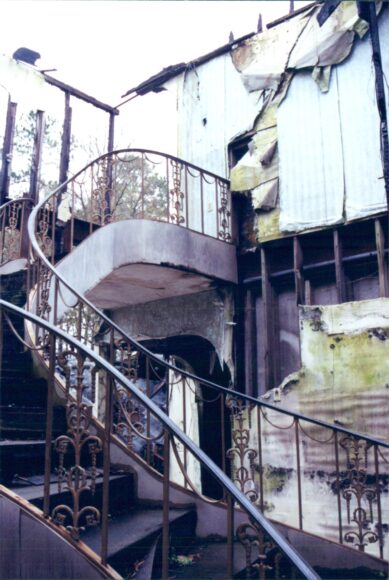 Notwithstanding, many things can negatively affect the reliability of a Fire Alarm System to perform its intended function during an emergency. For the system to be reliable, it is mission-critical that each aspect of the system be provided by an Alarm Contractor with specialized education, skill, knowledge, training, and experience in NFPA 72, UL Standards, and Nationally Recognized Industry Standards and Best Practices.
The system must be provided in accordance with the requirements of the Authority Having Jurisdiction (AHJ), typically the Fire Official. An alarm contractor must receive approval from the Authority Having Jurisdiction for new installations, additions to the system, and/or replacement of the Fire Alarm Control Unit (FACU) before the work is performed, which often requires compliance with the plans and permitting process as well.
In the event of a loss, requesting copies of plans and permits is also an important function of a forensic investigation.

Written By
Jeffrey D. Zwirn
www.alarmexpert.com
800-353-0733
© 2026- IDS Research and Development, Inc.
Was this article valuable?
Here are more articles you may enjoy.
 Exxon Blocked Proposal to Settle $5 Billion Kashagan Dispute
  Tesla Faces Probe Over Claim of Robotaxis Speeding in School Zones
  ‘Unusual’ Isaias Brings Winds, Downed Trees But Fewer Claims Than Expected
  Hackers Tricked Asos Employee to Steal Work Account Login
Want to stay up to date?
Get the latest insurance news
sent straight to your inbox.