
European insurers that want to ride the private credit boom need to grasp the risks they face, according to the region’s top watchdog for the industry.
The region has “a multitude” of insurers of varying size, some of which don’t yet have the necessary capabilities, Petra Hielkema, chair of the European Insurance and Occupational Pensions Authority, said in an interview on Thursday in London.
“If you want to enter into this business that, to a certain extent, used to be bank business, then you need to get your expertise up and running,” she said. “What you tend to see is if things get fancy, people might say, ‘Oh, let’s also do a bit of this’. But then, do you know what you get into?”
Regulations put in place after the 2008 financial crisis have caused banks to step back from some financing businesses. The strong financial position of European insurers and pension funds coupled with the long-term nature of their liabilities mean they’ve been able to help to fill the gap.
That has allowed the industry to diversify investments and reap the higher returns associated with less liquid assets. While insurance regulations are set to allow for further allocations to such asset classes next year, watchdogs like EIOPA want to avoid eroding trust in the sector, should firms run up losses.
Insurers need to be able to identify, measure, manage and report the risks, Hielkema told Bloomberg Television earlier in the day. That includes developing models for default probability and losses in the event of a default, Hielkema said.
“If the markets become volatile, and they tend to do that these days, we want to make sure that assets and liabilities move in a matched way,” she said.
European insurers had €514 billion ($597 billion) of exposure to private credit, or 5.1% of their assets, at the end of 2024, EIOPA said in December.
The lion’s share of that is in real estate and mortgages, rather than loans to software companies, which have been a cause of concern for investors worried about the potential for disruption by artificial intelligence.
Hielkema said she’s “less worried” about those asset classes, in part because insurers and their supervisors are well acquainted with them. What gives her pause is the more complex packaging of investments, something that is particularly relevant at insurers owned by private equity.
“I see a whole new development of structured products behind private credit that are tailored to a certain credit risk or liquidity risk,” she said.
While that’s more common in the US, liabilities can stretch longer in the European Union and insurers need to grasp their time horizon, related liquidity and credit risk, she added.
“I’m not sure if everyone is currently in my market is ready to really be able to do that,” Hielkema said. “And if you can’t do it, then then maybe you should first get ready.”
Buyout firms have increasingly shown interest in acquiring insurers to tap a steady source of cash for investments. Just 2.4% of the European insurance market is owned by private equity, although the figure exceeds 15% in Greece, Luxembourg and Portugal, according to EIOPA.
In February, EIOPA started a consultation on a so-called supervisory statement on the authorization and oversight of private equity ownership of insurers. The watchdog is also working on a statement on asset-intensive reinsurance expected around the end of the year, Hielkema said.
Hielkema said she welcomes interest in the EU market and that private credit can bring innovation and access to new capital.
“But it should come with a reasonable understanding of the new risks that it brings,” she said. There’s a “need for transparency and clear valuation to understand not so much who is the owner of the insurer, but who is the owner of the risk.”
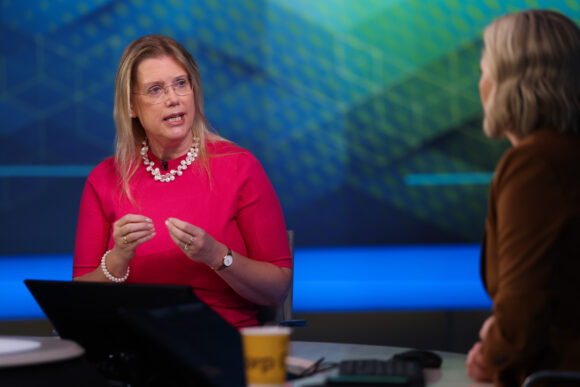
Top photo: Petra Hielkema in London, on June 4. Photographer: Betty Laura Zapata/Bloomberg.
Was this article valuable?
Here are more articles you may enjoy.
 Report: Property Claims Face Delays, Are Growing More Complex
  PG&E Warns of Possible Weekend Power Shutoffs Amid Windy Weather
  Slips, Trips And Falls: Why It’s Important to Get Ahead of An Incident
  Anxiety Over Gas Prices Points to ‘Looming EV Comeback’ in US
Want to stay up to date?
Get the latest insurance news
sent straight to your inbox.