
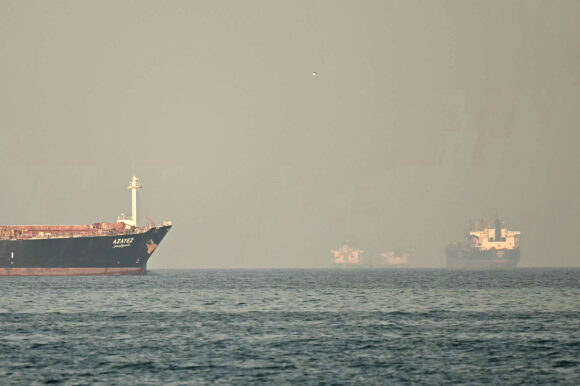
President Donald Trump said the U.S. would provide insurance guarantees and naval escorts to ensure safe passage for oil tankers and other vessels through the Strait of Hormuz, intending to head off a potential energy crisis caused by the war with Iran.
Trump said Tuesday that the U.S. International Development Finance Corporation would offer insurance “at a very reasonable price” to help ensure the flow of energy and other commercial trade in the Gulf. In addition, he said “if necessary, the United States Navy will begin escorting tankers through the Strait of Hormuz, as soon as possible.”
Related: Insurance Clubs to Halt Ship War-Risk Cover in Persian Gulf
“No matter what, the United States will ensure the FREE FLOW of ENERGY to the WORLD,” the president posted on social media.
Oil prices pared gains briefly on the news, with global benchmark Brent trading near $80 a barrel after settlement. While the latest measures knocked out some of the risk premium in energy markets, traders remain skeptical that it will allow oil flows to return to normal levels through the critical passageway quickly.
Prices have surged more than 10% since the U.S. and Israel began attacks on Iran over the weekend, triggering widespread disruptions in the Middle East and effectively bringing oil flows through the critical Strait of Hormuz, through which a fifth of the world’s energy supplies transit, to a halt.
Trump’s post did not elaborate on the insurance mechanism to be offered by the DFC, an institution that generally exists to mobilize private capital to developing nations and lower risks for investments in poor countries.
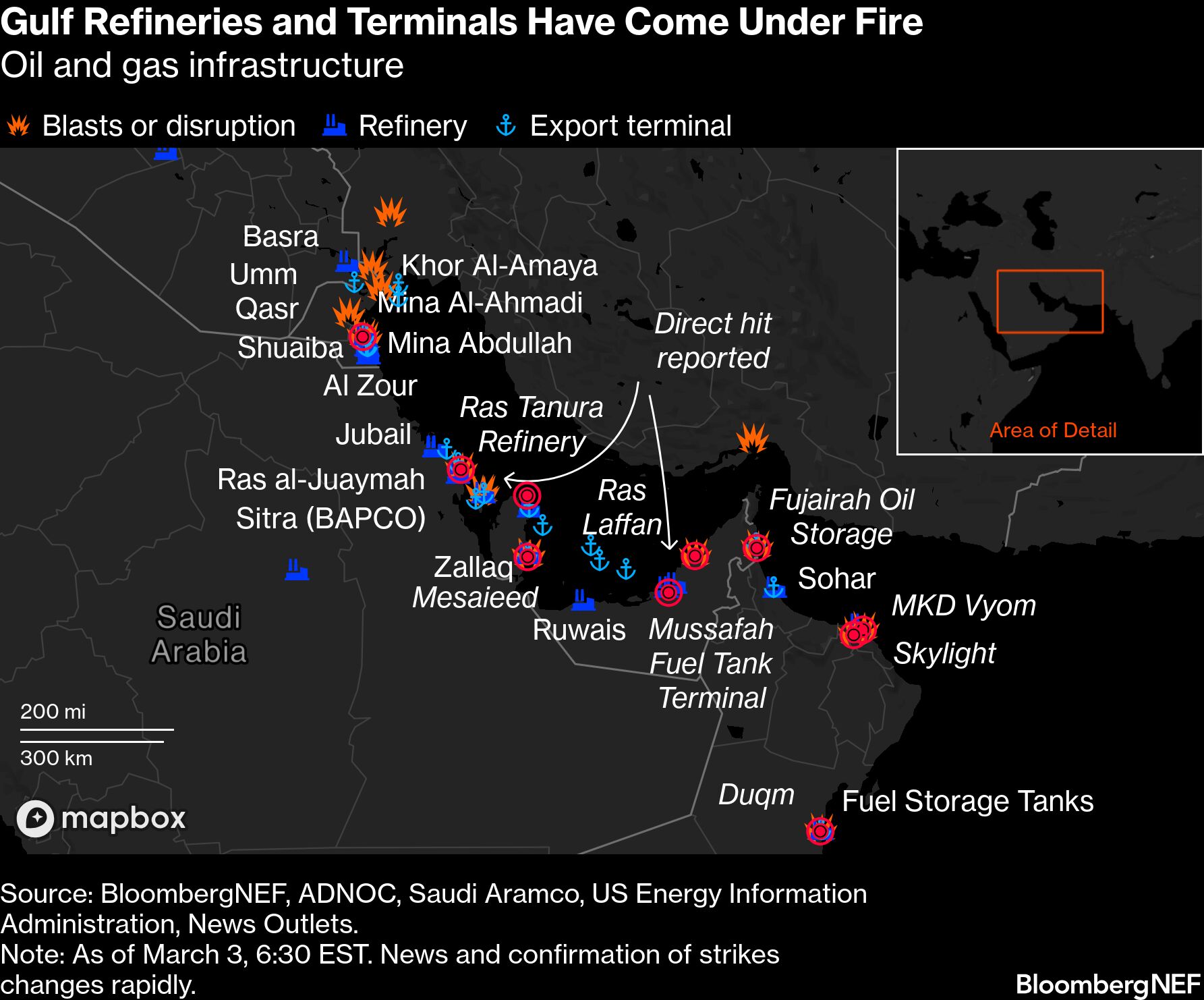
“The announcement may help to reassure traders, but escorting and insuring will take some time to implement,” said Bob McNally, president of consultant Rapidan Energy Group and a former White House official. “The U.S. military will first want to suppress Iran’s ability to mine and attack ships with anti-ship cruise missiles and drones.
“Assuming Tehran decides to continue fighting, we are expecting that full resumption of Hormuz flows will require weeks instead of hours or days, even with the announced and helpful plans to provide insurance or escort ships,” McNally said in an email.
A few things remain unclear about Trump’s vision of offering insurance to shippers willing to move through the Strait of Hormuz. For starters, it’s not immediately obvious how many will buy this insurance, or at what premium the DFC is going to offer.
Risk Level
“How much insurance premium is charged may indicate the level of risk the DFC sees” in the region, said Salar Ghahramani, a professor at Penn State University and founder of Global Policy Advisors, a sovereign wealth fund advisory firm. “Especially comparing that premium to what the private markets would provide.”
This could also be a gargantuan undertaking at a scale the DFC hasn’t handled before. The closest that the agency has come to offering coverage was providing political risk insurance to Ukraine after the Russian invasion began, according to a person familiar with the matter, but that was to insure new projects, not existing assets.
To be sure, a large subscription to the DFC’s insurance product could be a positive indicator that the war is under control.
“If a lot of companies buy it that would indicate they have full trust that the U.S. government would meet its obligations should they need to cash in the insurance,” said Ghahramani. “It could mean they generally see it as a likely signal that the risks will be diminishing as the days go on.”
Trump’s thrusting the DFC into the spotlight is further evidence that the agency’s significance within the federal government is growing. Issuing risk insurance amid a war further establishes the agency’s foreign policy influence and its potential as a sovereign wealth fund, Ghahramani said, and the move comes weeks after the DFC issued a memo to staff saying it wanted to be more like a sovereign wealth fund.
Trump’s announcement came after some concerns were raised about insurers putting upward pressure on oil prices as insurance contracts were getting pulled, according to people familiar with the matter.
Some of the world’s largest maritime insurance mutuals withdrew war risk insurance cover for ships entering the Persian Gulf as the industry scrambles to work out how to price the cost of covering vessels sailing into the waterway.
Gasoline Prices
The administration is also seeking to address high prices for consumers as gasoline prices have already jumped to the highest levels in five months, posing a political risk for Trump before the November midterm elections.
Secretary of State Marco Rubio told reporters this week that the U.S. had anticipated energy price increases and that Treasury Secretary Scott Bessent and Energy Secretary Chris Wright would roll out a program to mitigate the effects. Trump was due to meet with Wright and Bessent on the issue at the White House on Tuesday afternoon.
Political risk insurance, like that offered by the DFC, helps cover losses due to war, violence and other political turmoil.
Top photo: Cargo ships in the Strait of Hormuz in February. Giuseppe Cacace/AFP/Getty Images.
Was this article valuable?
Here are more articles you may enjoy.
 EU’s Insurance Watchdog Warns of Risks Tied to Extreme Heat
  Agentic Intelligence for Claims Dominates New Tech Launches
  Google Accused of Overcharging 20 Million Consumers in UK Class Action
  Prime London Homes Are Increasingly on Frontlines of Extreme Weather
Want to stay up to date?
Get the latest insurance news
sent straight to your inbox.