
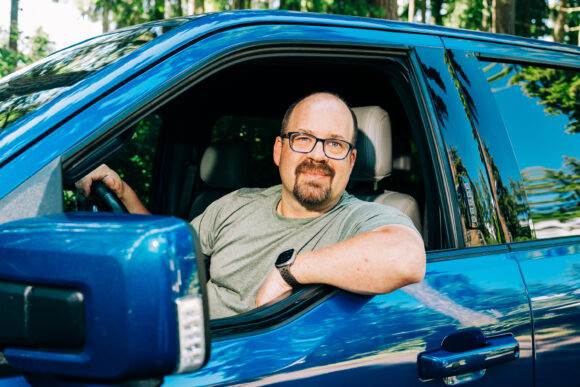
Eric Flickinger reached his breaking point this spring while filling up his Ram 1500 pickup with diesel that cost $7.39 a gallon. When the pump clicked off, it read exactly $200.
As if that weren’t painful enough, when he hopped back in his truck and started it up, the needle on his gas gauge still didn’t hit full. Turns out, his bank only pre-authorizes a maximum of $200 at a gas pump. Topping off his 33-gallon tank would have required nearly $50 more.
Related: Made-in-China EVs Enter Canada Under Deal Carney Struck With Xi
“I was like, what the hell?” said Flickinger, 47, a mechanical engineer who lives outside Seattle. “It pushed me to really think, ‘OK, what can I do to resolve this?’ Because I don’t see prices going down any time soon.”
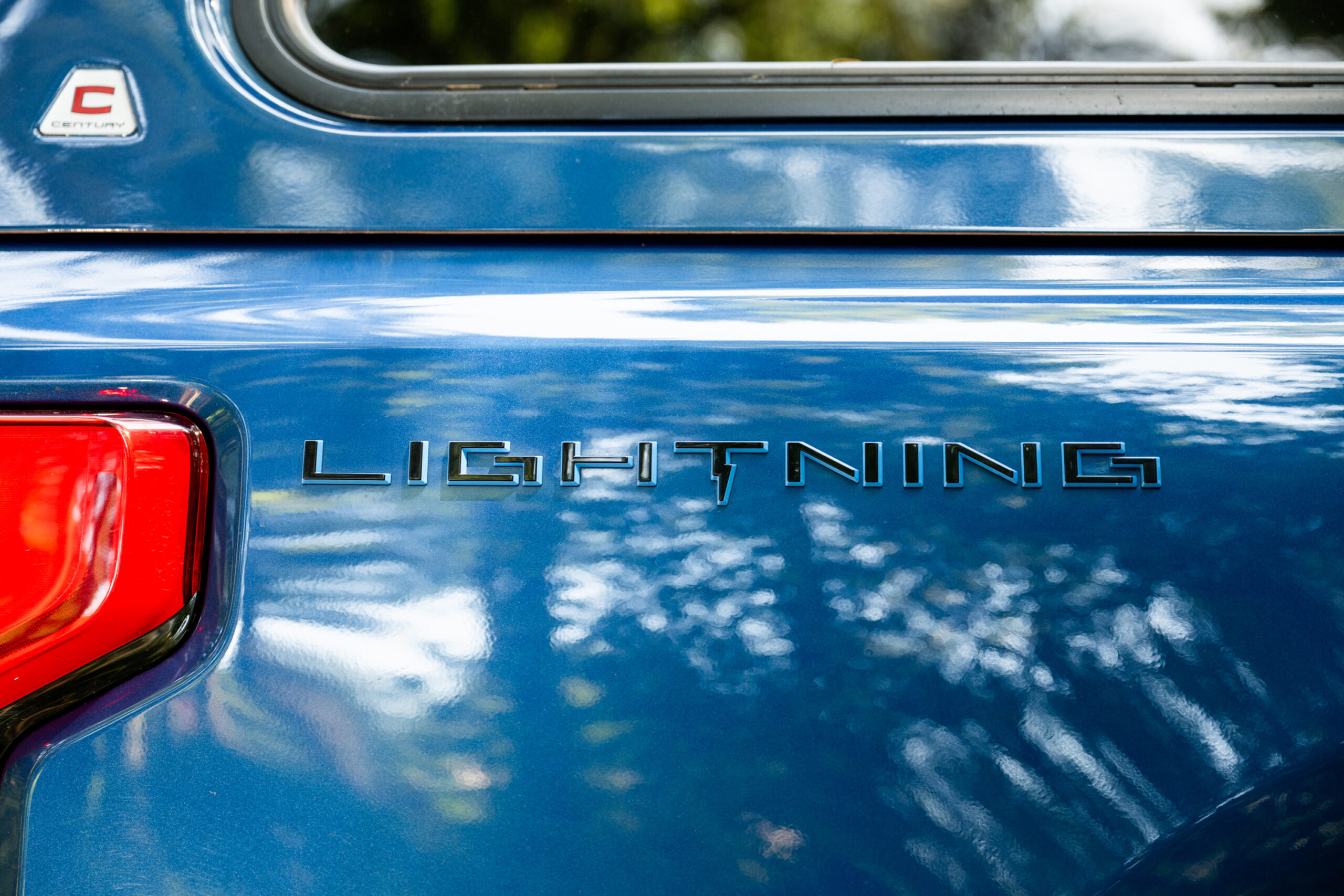
His answer? He bought a four-year-old Ford F-150 Lightning electric pickup.
Flickinger is one of the growing number of Americans finding refuge from soaring fuel prices in a used-car market that’s awash in affordable EVs that automakers struggled to sell at higher prices when they were new. Close to 40% of used battery-powered cars currently on dealer lots are priced below $25,000, according to researcher Cox Automotive, roughly half what the average new car sells for in the US.
Pre-owned EVs are now available in more shapes and sizes than could be found just a few years ago. And more than a million are set to hit the used car lot by late next year, often with years of coverage remaining on their original factory warranty, assuaging concerns about the longevity of EV batteries that have held back some first-time EV shoppers.
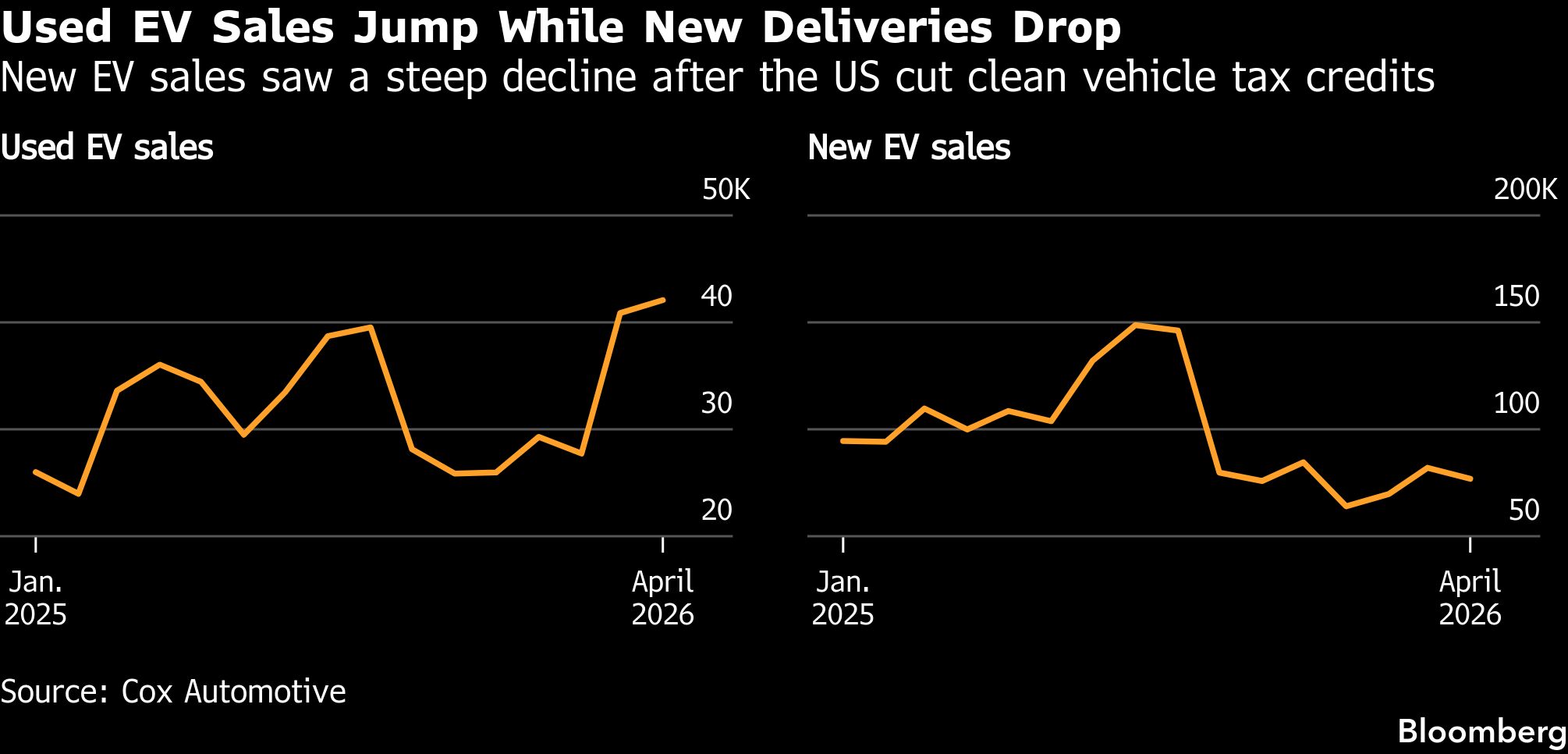
Used EV sales jumped 17% in the US through the first four months of the year. That defied an almost 27% plunge in sales of new EVs and a 7% slide in overall new-vehicle deliveries.
And it’s not just the tech-savvy younger crowd flocking to used EV lots. Mainstream buyers who wouldn’t have considered going electric in the past are now doing just that.
Related: Bargain Car Hunters Drive Next Wave of US EV Sales
“I’m seeing 50- and 60-year-olds coming in and buying EVs now, which, you know, is crazy,” said Jay Clark, used car director at the Ron Marhofer auto dealerships in Cuyahoga Falls, Ohio.
Many automakers have curtailed their electric ambitions that fell well short of expectations as consumers resisted paying steep prices. Ford in December canceled the next electric version of its iconic F-150 as it took $19.5 billion in charges on under-performing EV assets. But EVs are now getting a second act on the used car lot, one that points to genuine consumer demand for battery-powered cars in America, if the price is right.
As a Scout leader who regularly hauls his two teenage daughters and their troop mates on camping trips, Flickinger was always intrigued by electric pickups, but their luxury-level prices were “out of the question.”
But at $44,000, the used Lightning cost less than half of its original sticker price. And with the trade-in value for his six-year-old Ram, Flickinger was able to purchase the Ford without taking on a new car payment.
“Just doing the back-of-the-envelop math, it penciled,” he said.
California car dealer Jeremy Beaver is seeing brisk business at his well-stocked used car lot.
“For consumers, the cost of everything else in their life has gone up, and they’re looking for something that saves them money on gas and isn’t a $50,000 new car,” Beaver said. “There’s a real appetite for someone who wants to jump into an EV for the first time and have a reasonable monthly payment.”
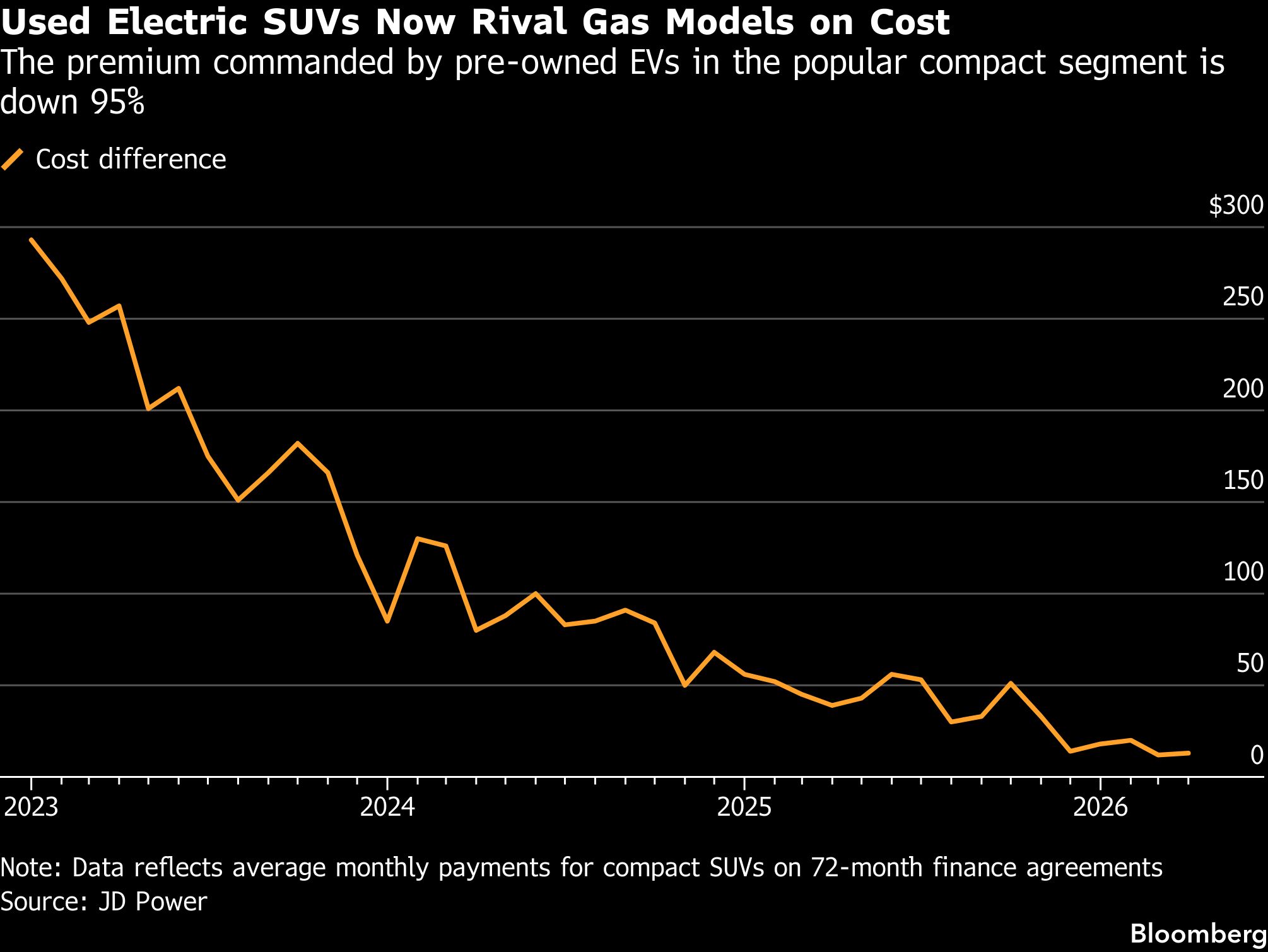
The average list price of a used EV is around $35,000, only about $1,000 more than an equivalent pre-owned gas-fueled car, according to Cox. On a six-year loan, the $20 difference in monthly payments is negligible for many buyers. In the high-volume compact SUV segment, the price gap has nearly disappeared between battery-powered and gas models. The average price disparity is closer to $6,000 in the overall new-car market.
“We’re pretty close to price parity with used EVs, and that’s huge,” Stephanie Valdez Streaty, director of industry insights at Cox, said in an interview.
Ironically, some of the factors helping make used EVs such a good deal are the same issues that have hampered sales of new EVs. Resale values are weighed down by the availability of public charging stations, fears of running out of juice on the road and concerns about how long the costly batteries will last.
To overcome some of that consumer unease, Beaver sends his staff to used-vehicle auctions specifically in search of low-mileage EVs that are still under warranty.
“In a dream world, the price point is in the low $20,000s and it’s a car that still has some bumper-to-bumper factory warranty on it,” said Beaver, chief executive officer of the Del Grande Dealer Group in the San Francisco Bay Area. “Our focus is on cars that are 18 to 36 months old.”
There’s plenty of inventory that fits that description these days. Some 1.2 million battery-powered cars are slated come off lease and enter the used vehicle market over the next 18 months, according to Recurrent, a researcher that provides data on used EVs to dealers and consumers. A loophole in legislation enacted under President Joe Biden caused EV leasing to surge to more than 75% of all EV transactions beginning two years ago, compared to about 20% for gas-fueled models, according to automotive researcher Edmunds.com.
Many of those cars are returning to the used market with years of protection remaining from their original factory warranty, which often covers EV batteries for eight to 10 years or 100,000 miles, said Srini Rajagopalan, vice president of data and analytics for researcher J.D. Power.
The supply dynamics should help consumers find a good deal on a battery-powered vehicle for the next two years.
“You’re going to see this glut of used EVs coming in that were heavily discounted two years ago and were primarily leased, which means there are going to be cheaper-priced used EVs right now,” he said.
Another driver of demand is the diversity of offerings on the used EV lot. Three years ago, Tesla Inc. dominated the new and used EV market with its handful of models.
Now, consumers who don’t want to buy a car made by Elon Musk can browse a wide variety of EVs from General Motors Co., Hyundai Motor Co., Volkswagen AG, Rivian Automotive Inc., Mercedes-Benz Group AG and others. The selection of used EVs on dealers’ lots has tripled in the last four years, from fewer than 40 models available back in 2022 to more than 120 now, according to Cox.
“Three years ago, it was limited to sedans and crossovers,” said Andrew Garberson, head of research at Recurrent. “Now you’re seeing trucks and three-row SUVs and luxury crossovers and more affordable crossovers. It’s just the kind of cars that people want to buy.”
Heidi Dresbach first noticed the sleek Cadillac Lyriq EV at a stop light while driving her nine-year-old Lincoln SUV and thought, “I love the look of that car.” But she was put off by its $65,000 to $75,000 sticker price. That is, until she found a used 2024 model online with only 3,000 miles on it for just over $36,000 and headed straight to the dealer near Cleveland.
“I was sold before I even pulled out of the parking lot for the test drive,” said Dresbach, 56, a wealth management adviser who spends a lot of time on the road for work. Although she loves her powder blue Lyriq, being able to skip the gas pump was a big part of her decision.
“Fill-ups lately have been $65, $70,” she said. “When you’re driving 1,200 miles a month, that’s significant.”
Top photo: Eric Flickinger with his electric Ford F-150 Lightning pickup near his home in Newcastle, Washington. Bloomberg.
Was this article valuable?
Here are more articles you may enjoy.
 Hackers Tricked Asos Employee to Steal Work Account Login
  Warren, Hawley Press Insurers Over Closed, Unpaid Claims
  PG&E Warns of Possible Weekend Power Shutoffs Amid Windy Weather
  Hordes of Teens on E-Bikes Force Suburbs to Rewrite Road Rules
Want to stay up to date?
Get the latest insurance news
sent straight to your inbox.