
Alibaba was sued in New York by shareholders who accused the Chinese e-commerce giant of defrauding them by concealing its ties to the suspected Chinese spy whose relationship with former Nvidia Chief Executive Jensen Huang contributed to his resignation last week.
According to a proposed class action filed in Manhattan federal court on Thursday, Alibaba inflated its share price by knowingly and materially understating in its 2024, 2025 and 2026 annual reports the risks that actual or suspected export control violations could harm its business.
Shareholders cited Alibaba’s relationship with Megaspeed, a Singaporean company suspected of helping Beijing gain access to advanced Nvidia AI chips, and whose executive Alice Huang had a relationship with Jensen Huang, who is not related to her.
The shareholders said Alibaba shares fell 14% over four days last week because of media reports on Alibaba’s ties to Alice Huang and Megaspeed, including that Alibaba had become Megaspeed’s “dominant” customer.
They attributed part of the decline to a November 12 Reuters article that said Nvidia’s spy scandal could spur Washington to tighten restrictions on Chinese AI companies’ remote use of advanced processors.
Alibaba did not immediately respond to requests for comment. Eddie Wu, its chief executive, is also a defendant.
Nvidia itself faces several shareholder lawsuits over the spy scandal, including allegations of lax oversight by its directors.
Wu said on Thursday that Alibaba remained on track for $100 billion in external cloud revenue and a 20% EBITDA margin by 2030, despite U.S. curbs on access to computing power that could affect the company’s products and services next year. The restrictions were imposed after Huang resigned from Nvidia.
In June, Alibaba sued the U.S. government over being added to a blacklist of “Chinese military companies” that the Department of Defense linked to that country’s military.
Last month, a federal judge in California granted Alibaba an injunction barring the U.S. government from denying Pentagon contracts to companies whose lobbyists also work with designated Chinese military companies.
Alibaba said that restriction caused its lobbyists to retreat because they feared losing other clients, and violated its First Amendment constitutional right to speak to and petition the government.
Thursday’s lawsuit by Alibaba shareholder Withida Bihan seeks unspecified damages for holders of Alibaba’s American depositary shares between May 23, 2024 and November 11, 2026.
(Reporting by Stempel in New York; Editing by Sonali Paul)
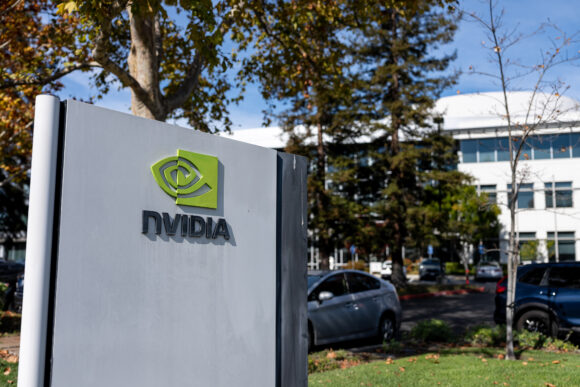
Top photo: Nvidia headquarters in Santa Clara, California.
Was this article valuable?
Here are more articles you may enjoy.
 Insurer Says eBay Not Covered for $55.7M Settlement for Harassing Couple
 Two Architects of Key State AI Laws Come to Washington to Do It Again
 Citi Settles Sexual Harassment Claims by Managing Director
 Probe of Mark Walter’s Insurers Spotlights Gaps in Regulatory Patchwork

Want to stay up to date?
Get the latest insurance news
sent straight to your inbox.