
Google’s YouTube is finalizing a multibillion-dollar settlement payout to school districts across the U.S. that have accused the company of designing an addictive video platform that has damaged the mental health of students, people familiar with the matter said.
YouTube has reached an agreement in principle to potentially pay around $3 billion to thousands of school districts, say the people, who asked not to be identified discussing confidential information. That would make it the largest corporate settlement ever reached with school districts in the U.S.
The deal with YouTube includes additional product safeguards for teens. Google spokesman José Castaneda declined to comment on the settlement, as did the plaintiffs attorneys co-leading the school district cases in federal court.
If finalized, the settlement would allow YouTube to avoid a major wave of litigation with the schools — a crucial arena for its business model. YouTube is deeply embedded in the lives of students, both outside and inside U.S. classrooms, where Google’s Chromebook is the most commonly used student laptop. Many teachers say they use YouTube for instructional purposes, making schools a particularly consequential legal battleground for the company.
As the settlement over addiction claims is finalized, Google has faced a separate backlash with schools over its refusal to block AI chatbot features from search tools used by students. On Thursday, hundreds of Google employees urged their employer to allow schools to use Google Search without AI chatbots and the controversy is ongoing.
The deal, which is contingent on a majority of the school districts signing on, will likely take a few months to officially finalize. This litigation marks one of the few times that the districts have exercised their collective action against a corporation in a mass tort, where multiple lawsuits are bundled together to streamline the pretrial process but each case is handled independently.
YouTube’s historic deal with schools comes amid a global backlash against social media, with growing concerns that the companies profit at the expense of their teen users’ mental health. More than 10,000 lawsuits have been filed against YouTube, Meta Platforms Inc., Snap Inc. and TikTok Inc. in the past five years by schools, individuals and state attorneys general, accusing them of creating products as addictive as cigarettes and targeting them to minors, just like Big Tobacco.
The lawsuits claim that the platforms’ features, including limitless scrolling and autoplay video, have warped a generation of children, causing addiction, depression, anxiety, eating disorders and suicide. In August, Meta reached a landmark deal involving almost every US state in which the company agreed to pay as much as $18 billion and to make sweeping product changes, including a two-hour daily limit on teen scrolling.
While individual plaintiffs are seeking compensation for personal losses, the school districts want reimbursement for the institutional costs of social media addiction – including burgeoning mental health and counseling services for students. The districts have argued that the companies knew about the mental health risks for youth, but failed to design features to reduce the addictive nature of the products. (Thousands of the individual personal-injury lawsuits against YouTube remain active.)
The first bellwether social-media addiction trial involving a claim by a school was scheduled to begin in June, but all four defendants settled with the rural Kentucky school district a month before. The companies paid a combined $27 million to avoid trial with the Breathitt County School District, which is nestled in the foothills of the Appalachian Mountains and has fewer than 2,000 students.
In that earlier settlement, YouTube negotiated a payout of slightly more than $2 million and was the only company that also agreed to provide the district with training programs, according to documents released under Kentucky’s open records law. Meta paid $9 million while Snap and TikTok each paid $8 million. In written statements, the companies said they had resolved the case amicably and would continue to invest in stronger safeguards for their users.
The next federal case centers on a school district in Tucson, Arizona, with about 40,000 students. The trial is scheduled to begin in February before a judge in Oakland, California, who is overseeing all the school district cases. Three defendants remain: Meta, TikTok and Snap.
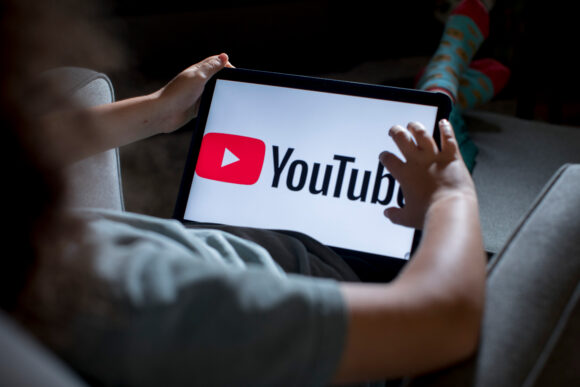
Top photo: A child holds a tablet displaying the YouTube logo in an arranged photograph in Sydney, Australia, on Wednesday, Dec. 3, 2025. Photographer: Brent Lewin/Bloomberg via Getty Images. Bloomberg.
Was this article valuable?
Here are more articles you may enjoy.
 US Airlines Race to Recover From Longest Shutdown in Decades
 Nationwide Ground Stop Cost ‘Billions of Dollars,’ Duffy Says
 Report: Rising Disaster Risks Threaten Insurance Availability, Home Values
 Compass Sues Multiple Listing Services, Upping Antitrust Row

Want to stay up to date?
Get the latest insurance news
sent straight to your inbox.