
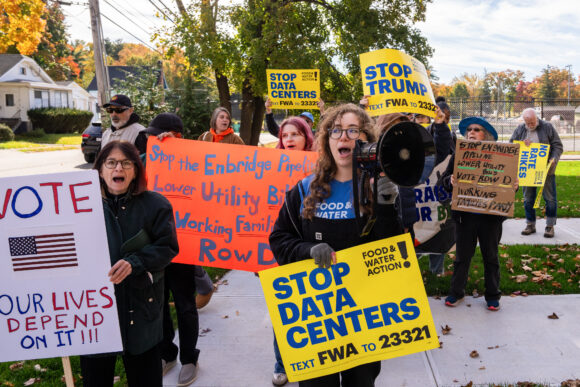
Colorado’s Manny Rutinel and California’s Scott Wiener took on the artificial intelligence industry in their respective state capitals and won. Now they’ve arrived in Washington looking to do the same again.
The two Democratic congressmen-elect, who as legislators back home were architects of the country’s first major state-level AI laws, are preparing to work hand-in-hand this time, in their drive for a federal law.
Though they had never met in person before this week’s orientation for new lawmakers, Wiener and Rutinel have been phone friends for years, helping to advise one another through lobbying battles with the tech industry and tough committee votes.
“We both took on this issue before it was considered popular, when it was more of a brutal fight with industry,” said Wiener, who spent the better part of the last three years laser-focused on passing AI safety laws as a California state senator representing San Francisco.
The issue is popular now. From Ohio to Georgia to Florida, Democrats ran and won on demands for stronger regulation of AI and data centers, galvanizing voters amid increasingly widespread unease about the technology and concern about how AI will reshape society.
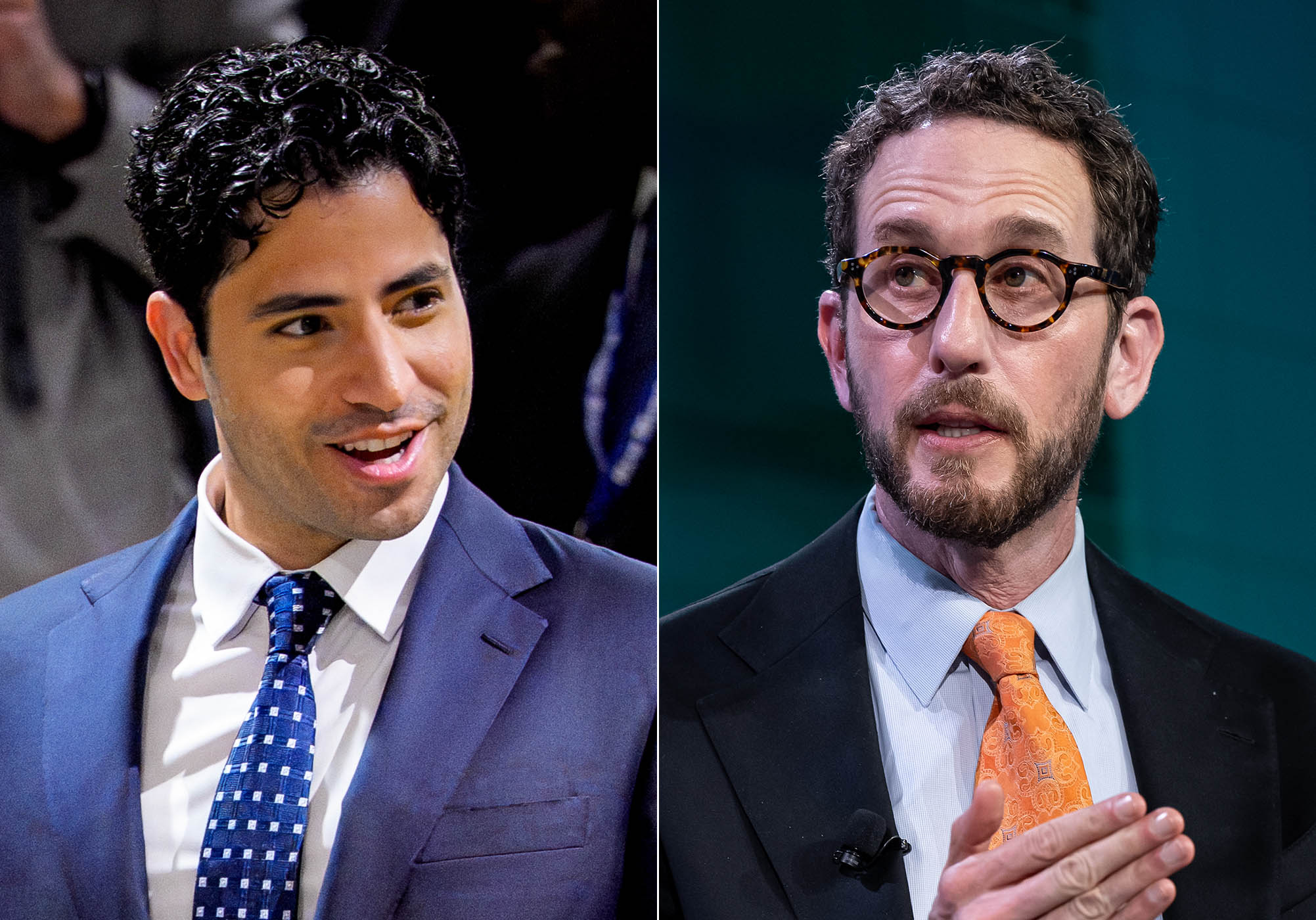
Rutinel and Wiener, both of whom won tight congressional races last week, are angling for spots on a potential AI select committee, which Democratic party leaders in the House are considering setting up to expedite action on federal AI regulation next year.
“It is potentially one of the most defining issues of our time,” Rutinel said. “Right now we’ve got the largest corporations on the planet putting profits ahead of people and pushing reckless experiments that are putting our families’ health at risk, our kids’ futures at risk, our paychecks at risk.”
The struggle ahead is likely to be fierce. Democratic leaders’ plans to push for significant AI guardrails next year confront a potential veto by President Donald Trump, who has steadfastly opposed stricter AI regulation and argued limitations on U.S. companies risk losing ground to China on a strategically pivotal technology.
Financial markets are also heavily betting on rosy expectations for the industry’s future profitability, a vulnerability made clear once again by the hundreds of billions of dollars investors lost following disclosure of Nvidia Corp. co-founder Jensen Huang’s relationship with a suspected Chinese spy.
Wiener and Rutinel come at the issue from different vantage points. Wiener, 56, serious and studious, is characteristic of the San Francisco community he represents: philosophical, bespectacled and deeply enmeshed in the complicated world of Bay Area tech workers. He came to the issue through salons examining AI safety.
Rutinel, 31, a former climate lawyer who emphasizes his Colorado working-class roots, is atypical in the mostly coastal elite AI safety community. He started reading books on AI in 2018, then his interest grew more urgent as the technology developed.
Both men are described by people close to them as tenacious legislators focused on details and concerned with the most dramatic risks AI could pose, including so-called “loss of control” — the concern that AI could eventually stop needing human intervention to continue improving.
“We’re both dogged in wanting to get this done so that AI benefits humanity and doesn’t harm humanity,” Wiener said.
Both their campaigns for Congress were backed by thousands of dollars in donations from AI safety advocates, including many at the biggest frontier AI labs, as well as millions from super political action committees focused on promoting candidates who want to regulate AI.
Wiener’s signature legislation, vetoed in September 2024 and then signed into law in a stripped-down form a year later, addressed catastrophic risks, such as chemical, biological, radiological, or major cyber threats. Rutinel’s legislation, signed into law in 2024 and revised in May 2026, targeted AI-powered discrimination in employment, housing, finance, and healthcare.
Wiener was known for his relentlessness in the California legislature, meeting one-on-one with every single lawmaker who voted on his bills, according to his former colleague California Assemblywoman Rebecca Bauer-Kahan. “He negotiates the language personally,” Bauer-Kahan said. “He met with every single one of our colleagues to walk them through his AI bill, to earn their support.”
Rutinel, who was raised by a Latina immigrant single mother, worked at a McDonald’s for two years in high school and, by his account, sold his blood plasma more than 100 times to pay bills. He went on to earn a Yale law degree, working as a climate lawyer and activist before entering politics. Several people who have worked with Rutinel described him as charming and easy-going.
“He’s very down to earth,” said Scott Wisor, policy director at AI safety organization Secure AI Project. “He’s familiar with the issues that day-to-day folks are going to be concerned about. He has a vision about where things are headed.”
Former Democratic Oklahoma Representative Brad Carson, whose super PAC Public First spent $3.5 million boosting Wiener and $2.6 million for Rutinel, said he supported them because they were among the candidates “most involved in AI politics before they decided to run for Congress.”
Wiener in particular, Carson said, persevered on the issue despite facing major backlash over his initial efforts to pass AI legislation in California. Under intense industry pressure, California Governor Gavin Newsom vetoed Wiener’s sweeping AI law, which Wiener ultimately pared down into the law passed in 2025.
Nathan Calvin, chief strategy officer at AI safety group Encode, said Wiener was the first to take an “ambitious swing at directly regulating frontier AI risks,” including provisions in his initial legislation that would have made AI companies liable for catastrophic risks, required third parties to audit new AI models, and created a “kill switch,” or a mechanism to shut down AI products in an emergency.
“These ideas were considered fringe at the time, and resulted in the legislation being vetoed,” Calvin said. “But now those sorts of ideas are at the center of the national policy discussion.”
The more limited version Newsom ultimately signed requires AI developers to publicly disclose safety and security protocols and report critical incidents.
Rutinel, meanwhile, is “both deeply knowledgeable and deeply sensitive to how AI could go good or bad and is deeply committed to being a national leader in it,” Carson said.
That level of dedication makes a big difference in Congress, said Carson, a Capitol Hill veteran.
“You have to have people who are going to be leaders in the caucus and make it a priority,” he said. “They’re both going to do so.”
Was this article valuable?
Here are more articles you may enjoy.
 Binance Hackers Used Fake Job Interviews in $6.3 Billion Heist
 Terror Suit Against Drugmakers Draws US Supreme Court Inquiry
 Riot Risks in Europe Lead Insurers to Start Capping Coverage
 Google AI in School Triggered Teen’s Mental Health Crisis, Lawsuit Says

Want to stay up to date?
Get the latest insurance news
sent straight to your inbox.