
Tropical cyclone Narelle struck Australia’s northern Queensland coast on Friday, bringing destructive winds and heavy rains that forced miners to shutter multiple sites in the region.
Rio Tinto Group temporarily closed two bauxite mines, the Amrun and Andoom, as a result of the storm, according to people familiar with the matter. In total, they supply about 30 million tons annually of bauxite, which is used to make aluminum.
“The safety of our people and the surrounding communities is our top priority and our teams have been monitoring the weather situation and working with the relevant local and state authorities,” said a spokesperson for Rio, adding that “cyclone response plans” had been activated.
The world’s largest manganese mine, which is located on Northern Territory’s Groote Eylandt and is in the storm’s path, was also forced to shut, according to a spokesperson for South32 Ltd, which operates the project in a joint venture with Anglo American Plc.
The company had earlier evacuated non-essential staff from Groote Eylandt Mining Co. The site sustained significant damage in 2024 and was offline for over a year due to destruction from Tropical Cyclone Megan. The disruption to output at the time contributed to a spike in global manganese prices.
The powerful storm made landfall packing top sustained winds of 195 kilometers (120 miles) per hour, placing it in the second-highest category in Australia’s five-step system for tropical cyclone severity, according to the Bureau of Meteorology.
As it tracks west across the Cape York Peninsula, the system is forecast to bring as much as 400 millimeters (15.7 inches) of rain on Friday and raise the risk of flash floods, the bureau said in a video forecast. While the region is sparsely populated, it is home to several bauxite mines owned by Rio and Glencore Plc.
Narelle had intensified rapidly leading into Thursday, fueled by low wind shear and warm ocean temperatures, according to the US Joint Typhoon Warning Center. The Coral Sea, where Narelle churned and gathered strength, has recorded months of above-average temperatures, helping to charge up the storm with energy. The system only weakened slightly as it interacted with shallower water and land, the Australian weather bureau said.
#TCNarelle will cross the coast between Cape Melville and Lockhart River this morning as a Category 4 system after weakening slightly overnight. VERY DESTRUCTIVE WIND GUSTS in excess of 250 km/h possible near the centre of the system as it crosses the coast. pic.twitter.com/YHnHVsIR2x
— Bureau of Meteorology, Queensland (@BOM_Qld) March 19, 2026
Forecasters expect Narelle to continue its westward track across northern Australia, regaining some strength as it emerges over the Gulf of Carpentaria and heads for a second landfall in the Northern Territory on the weekend. The system is forecast to move off Western Australia’s Kimberley coast early next week, the agency said.
Narelle is the 10th named tropical cyclone to affect the region this season, according to official data. On average, the country sees 10 tropical cyclones each season, which runs from November through April, with three to four making landfall.
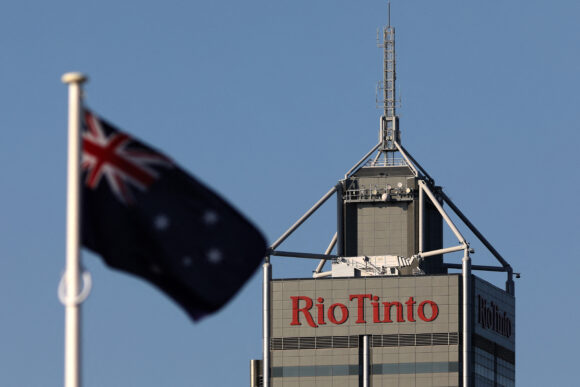
Top photo: The region is home to several bauxite mines owned by Rio Tinto Group. Photographer: Antony Dickson/AFP/Getty Images. Bloomberg.
Was this article valuable?
Here are more articles you may enjoy.
 Warren, Hawley Press Insurers Over Closed, Unpaid Claims
  First Atlantic Hurricane of 2026 to Threaten US Gulf Coast
  Agentic Intelligence for Claims Dominates New Tech Launches
  Climate Science Under Political Attack Reaches US Supreme Court
Want to stay up to date?
Get the latest insurance news
sent straight to your inbox.