
The El Niño building in the Pacific Ocean is increasingly expected to reach a strength not seen in 76 years of record keeping.
“During the October-December 2026 season, there is a 69% chance of a historic event that would exceed the strength of previous El Niño events dating back to 1950,” the U.S. Climate Prediction Center said in a forecast Thursday. The El Niño has “a greater than 90% chance of a very strong event during the Northern Hemisphere fall and winter 2026-27.”
Related: Hawaii Faces More Tropical Threats From El Niño-Charged Pacific
The agency noted that temperatures in July across the Pacific rivaled only those of 1997, which was also considered a powerful event. Thursday’s forecast is the most definitive statement yet from the Climate Prediction Center on the subject.
El Niño, declared in June, strengthened in July, with Pacific surface temperatures reaching 2C (3.6F) above normal in some areas and 1.4C above normal in the central ocean, the climate center, an arm of the National Weather Service, said Thursday. The event is expected to intensify through year-end, fueled by unusually warm water deep in the equatorial Pacific.
Related: Typhoon Season Forecast to Be Among Most Intense Ever for Asia
In coming months, El Niño will likely bring above-normal temperatures to much of the Northern Hemisphere, including western North America and southern Europe, the World Meteorological Organization said in a July report. India, Australia, the Caribbean and Central America may be drier than normal through October.
The Climate Prediction Center also said there’s a 100% chance El Niño will continue through March and a 97% likelihood it will last through April.
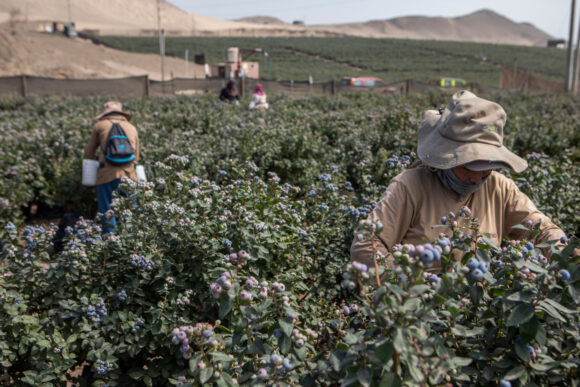
Top photo: Workers harvest blueberries at a farm near Huacho, Huaura Valley, Peru, on Saturday, July 25, 2026. El Nino has formed across the equatorial Pacific, setting the stage for months of droughts, floods and temperature fluctuations that will threaten communities worldwide along with agriculture and energy. Bloomberg.
Was this article valuable?
Here are more articles you may enjoy.
 EU’s Insurance Watchdog Warns of Risks Tied to Extreme Heat
  HSBC Executive Strikes Back in Court Fight Over Poaching Claims
  TikTok Accused by NY of Running Secret Safety Tests on Teens
  Hurricane Isaias Reaches Category 3 as It Nears Florida, Alabama
Want to stay up to date?
Get the latest insurance news
sent straight to your inbox.