
Meteorologists are forecasting about 13 named Atlantic storms this season, or a little less activity than average. That sounds like good news for the US power grid and everyone who relies on it.
But a look back at recent years suggests the number of storms in hurricane season, which begins June 1, may be an unreliable predictor of how much damage is caused, specifically when it comes to downed power infrastructure, according to a new research note by Hayley Lai, grids and utilities analyst for BloombergNEF.
The concentration and resilience of local infrastructure matters as much or more than a storm’s strength. Some areas are difficult to get to. Power lines, towers, poles, transformers and other supplies can take weeks to acquire, and cost up to $5 million a mile to replace.
Related: Pacific Hurricane Season Brings Higher Risk of Impacts for Hawaii, SoCal, Mexico
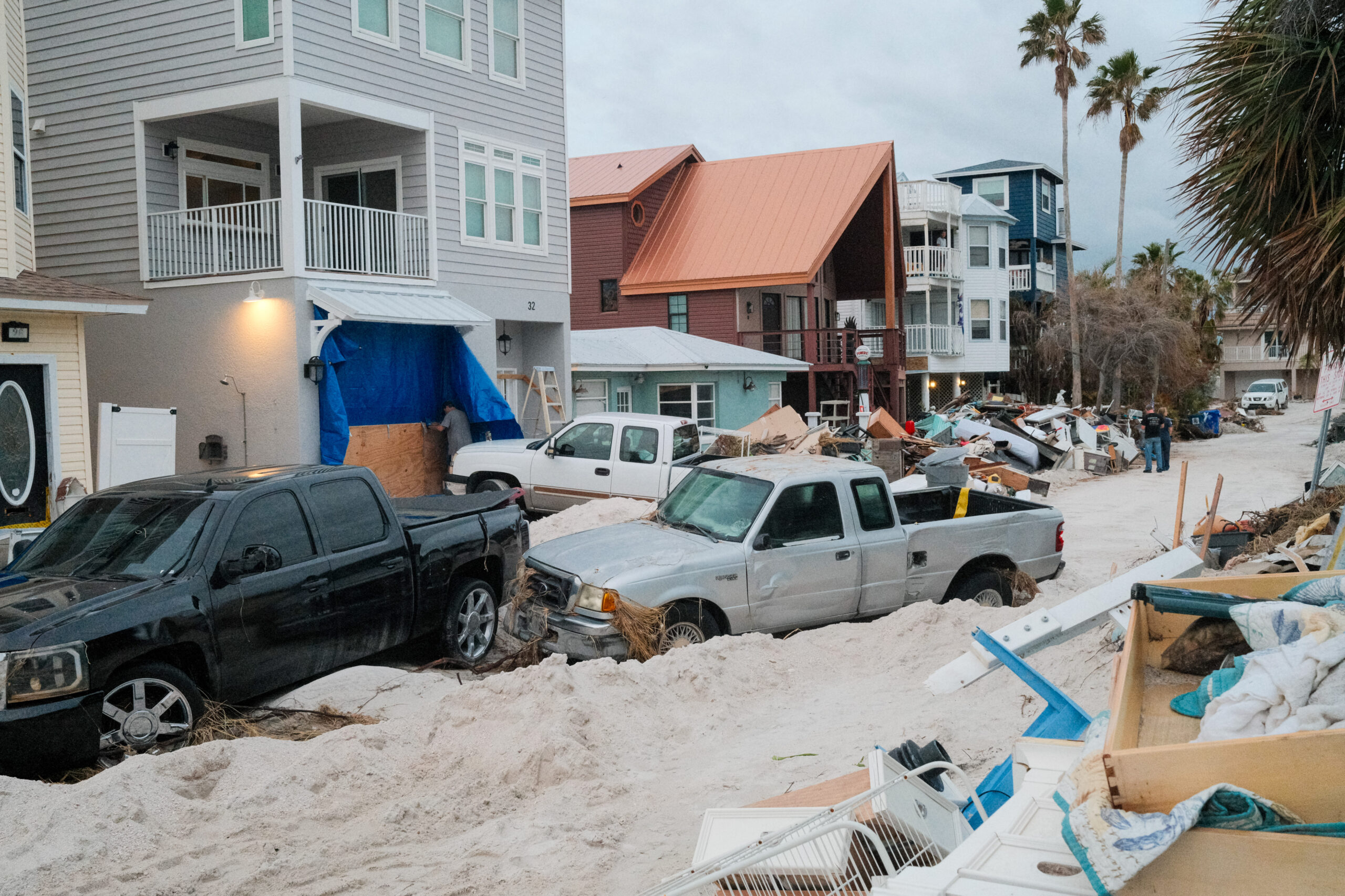
In September 2024, more than 7 million customers across 10 states lost power when Hurricane Helene tore through, causing deaths and destruction from Florida to Indiana. North Carolina was hit hardest, suffering 108 deaths, or more than twice South Carolina’s toll of 50.
The infrastructure damage there was, in many locations, complete.
“This was a very transmission-intensive storm — more than we’ve ever seen before,” said Brian Naumuk, senior vice president of grid services at Duke Energy Corp., in a 2025 interview. “More than 350 substations were impacted at the height of the storm.”
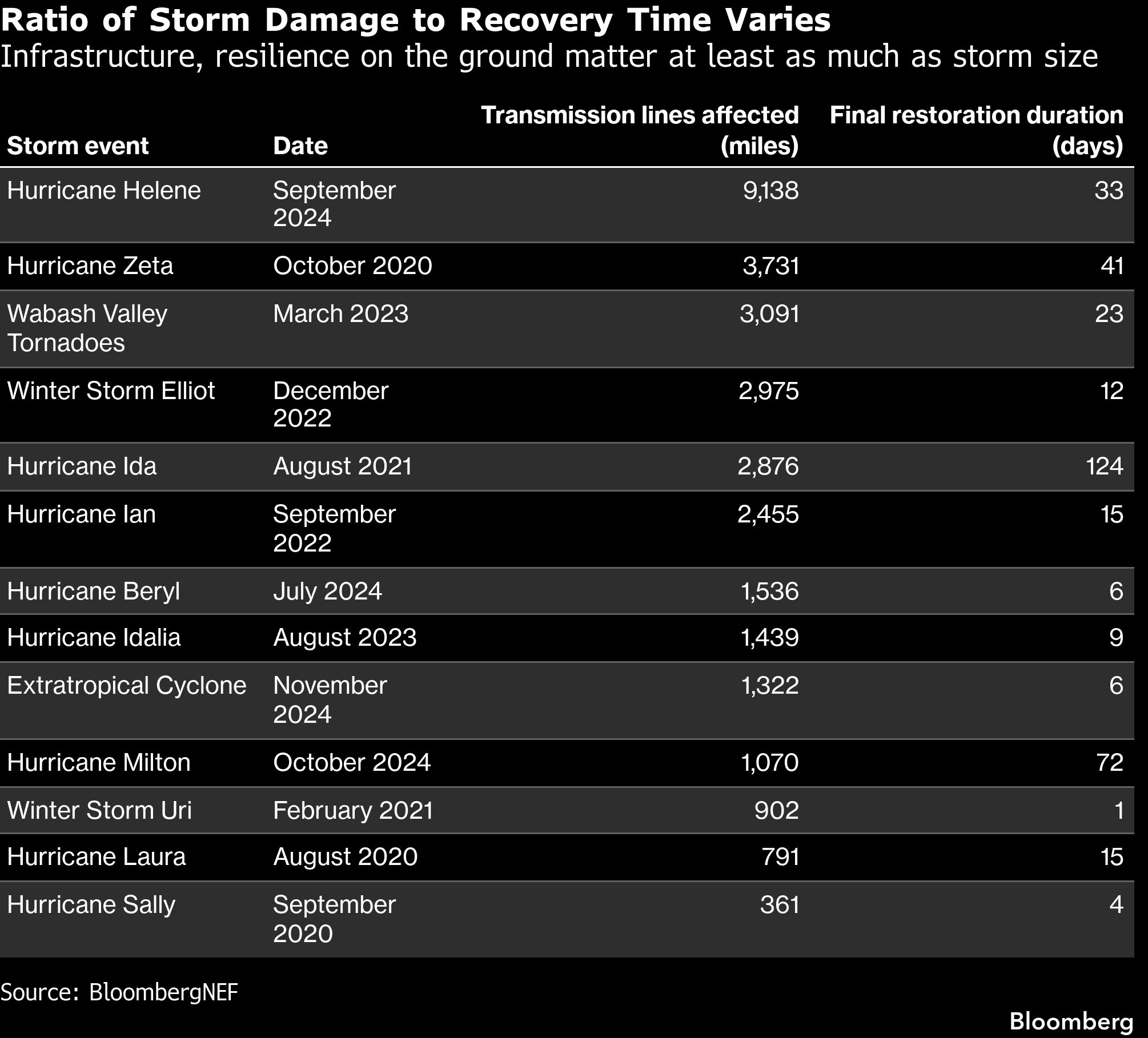
Despite the mammoth destruction, Helene nonetheless isn’t among the top three US storms since 2020 that needed the longest amount of time to restore power. Hurricane Ida in August 2021 made landfall in southern Louisiana — and went on to become the second deadliest storm on record in New Jersey, where 32 people died. It took repair crews 124 days to restore power fully, compared with 33 after Helene.
Category 4 Helene put 9,138 miles of US transmission lines out of service. Several weeks before that, Hurricane Beryl — which reached Category 5 wind speeds over the Caribbean Sea — swept onto the Gulf Coast, but affected only 1,536 miles of transmission.
Helene did 2.5 times more transmission damage than Hurricane Zeta, a Category 3 storm in October 2020 that made landfall on the Yucatán Peninsula and then several days later in Louisiana.
Protecting the grid from tropical storms and other extreme weather, including wildfires, is a major driver in utilities’ efforts to bury their power lines. Spending on that work jumped 80% over the 2010s, passing $9.3 billion in 2024, according to BloombergNEF.
Lai names Duke and Florida Power & Light Co. as utilities that have boosted storm resilience investments in recent years.
“What begins as storm damage can quickly evolve into a prolonged and costly recovery cycle,” she writes. “Despite a lighter hurricane outlook this year, the risk of severe damage and extended outages remains.”
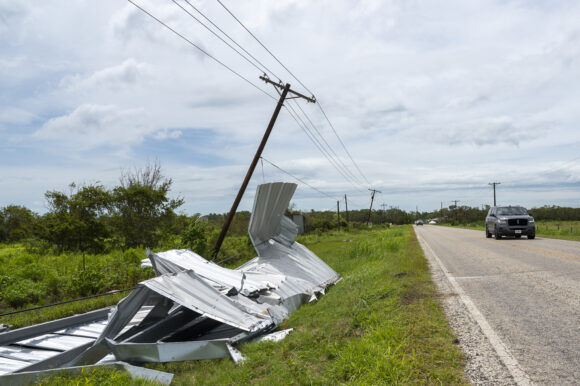
Top photo: Debris and damaged power lines on the side of a road after Hurricane Beryl made landfall near Matagorda, Texas, on Monday, July 8, 2024. Bloomberg.
Was this article valuable?
Here are more articles you may enjoy.
 Anxiety Over Gas Prices Points to ‘Looming EV Comeback’ in US
  Report: Property Claims Face Delays, Are Growing More Complex
  Google Faces $3.2 Billion Damage Claims on Ad-Tech Monopoly
  First Atlantic Hurricane of 2026 to Threaten US Gulf Coast
Want to stay up to date?
Get the latest insurance news
sent straight to your inbox.