
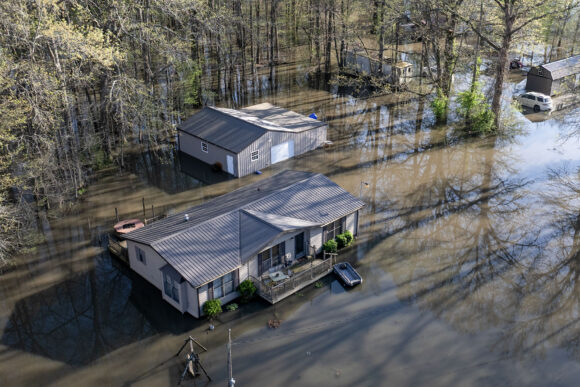
When Zillow Group Inc. removed climate risk scores from its home listings last month, following a complaint from the real estate industry, many observers took to the press and social media to warn that disappearing the data doesn’t get rid of the risk.
In a world assailed by extreme weather, homeowners and purchasers need to know their property’s vulnerability to wildfire or flooding. Ratings like those Zillow took down — which use the latest science, advanced computing and satellite imagery — are a big improvement on often outdated federal flood maps and state wildfire maps.
But they’re far from perfect, a growing body of research shows, with different models often yielding different results.
In October, a UK industry group, the Climate Financial Risk Forum, looked at how 13 different climate-risk companies each rated the same 100 properties around the world. The ratings were all over the place. Some saw a given property as highly vulnerable to flooding, for example, while others saw no risk there at all. For 20 of the properties, the study designers provided incomplete location data, to see if models could pinpoint the address. One model placed “a well-known store in Boston” on an Atlanta road with a similar name.
Risk modeling “is a relatively new discipline and it will take time for norms to emerge and become established,” the authors wrote.
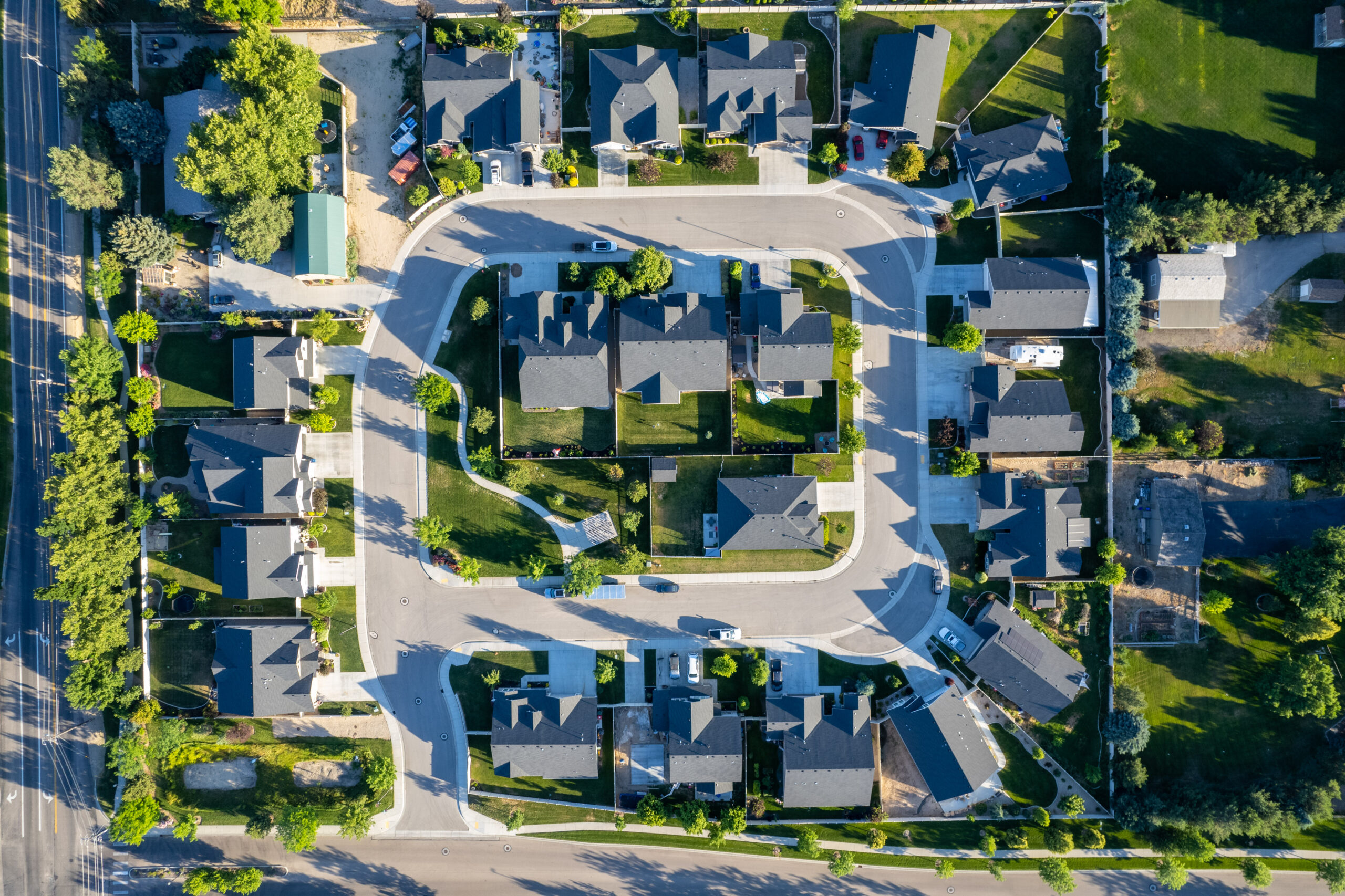
Bloomberg Green last year compared two flood risk models, one by First Street Technology Inc. — the company that generated the scores Zillow used — and another by researchers at the University of California at Irvine, and found they matched just 21% of the time.
If companies oversimplify their climate-impact projections — or worse, get them wrong — it could depress the value of some people’s assets for no reason and distort market pricing.
Zillow’s sitewide score removal took effect Nov. 14 and was first reported by the New York Times two weeks later. According to a spokesperson, the company acted to comply with the “varying requirements” of a major aggregator of real-estate listings. The company still provides links to First Street’s website.
The aggregator, California Regional Multiple Listing Service, said it found during routine auditing of real-estate portals that many houses carried very high probabilities of flooding, despite not having flooded in decades. “We grew very suspicious,” Art Carter, the listing service’s CEO, said in a statement.
First Street, which started as a nonprofit and reorganized into a closely held company, is a high-profile startup in a growing sector. As the toll of climate disasters has increased, so has demand for information on the risks to real estate. Moody’s Corp., S&P Global Inc., Cotality (the operating name of CoreLogic Inc.) and Swiss Re AG have all either acquired smaller companies or developed their own climate-risk products in recent years.
Matthew Eby, First Street’s founder and CEO, is quick to acknowledge that the spectrum of ratings is not as straightforward as it may look. “The complexity of physical climate risk models is difficult to understand,” he said. “And if you’re not an industry expert, the nuances are hard to follow.”
When global climate models are scaled down to a city block or home lot, and when the projections are pushed out further in time, the degree of uncertainty increases.
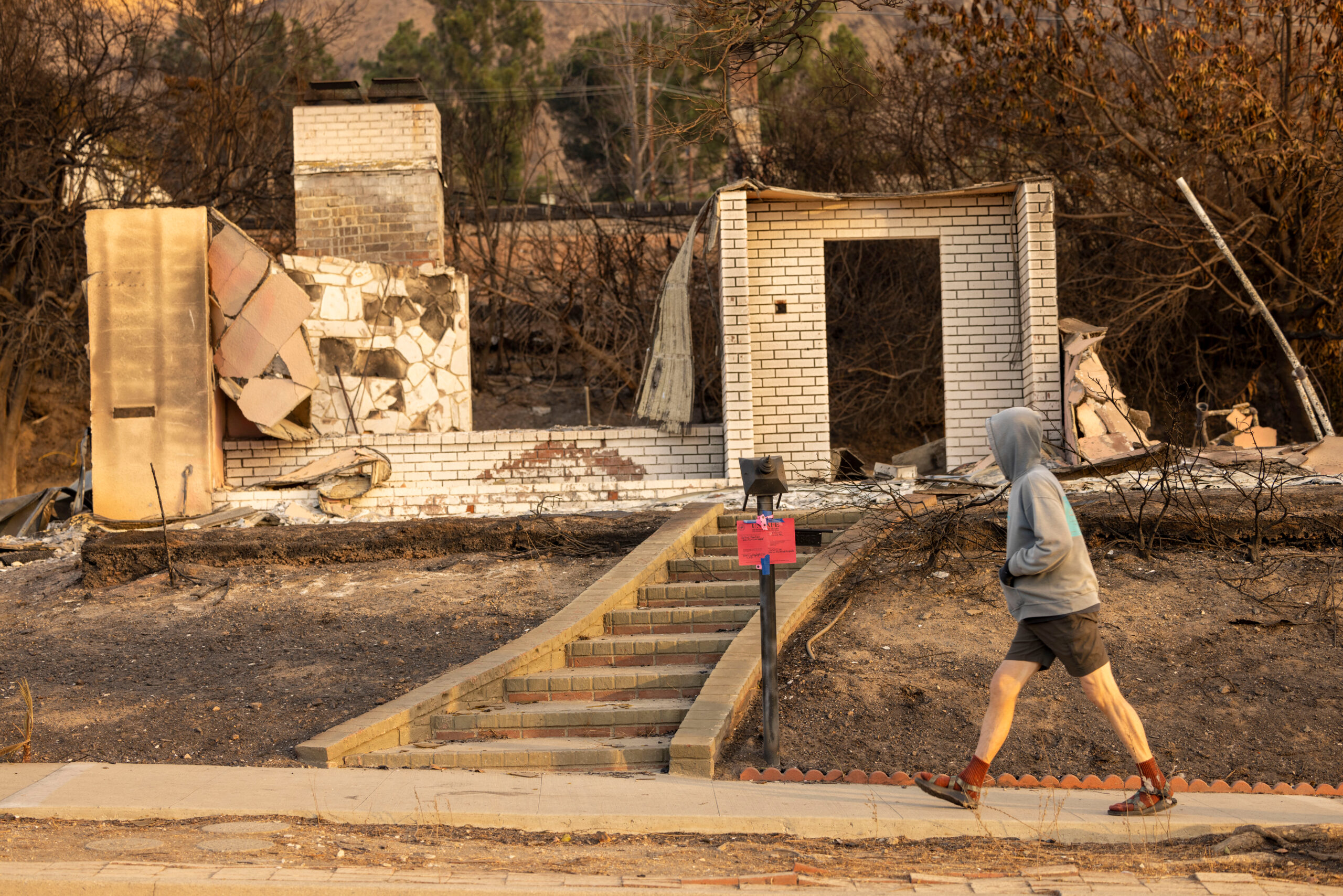
And extreme-weather hazards are only part of the risk profile.
“You have to know something about the individual structure — its foundation, the presence of a basement, first-floor height,” says Howard Botts, chief scientist of Cotality.
Each assumption that a model makes, implicitly or explicitly, adds another layer: land slope, a building’s use, how many stories it has.
“‘Climate risk’ is much more than just the physical hazard,” agrees Adam Pollack. “The relationship of hazard and the built environment — and damage — is the actual risk.”
Pollack, an incoming assistant professor at the University of Iowa who specializes in flood risk management, recently published an open-source software tool that he hopes will help researchers or companies think through uncertainties related to physical buildings.
First Street’s risk scores estimate a structure’s exposure to a hazard — not potential damage — over a cumulative 30-year period (the length of a conventional mortgage). If a house that has a high exposure score is surrounded by two feet of floodwater, but its first-floor elevation is three feet, the damage would be zero, despite the exposure.
“Our scores aren’t telling you how likely that home is to be damaged,” said Eby. “Our scores are telling you the exposure level of where that structure sits.”
There’s ongoing debate over how to reconcile the many models and approaches to climate risk. Scientists vet their models publicly. Insurers sic actuaries on theirs to try to improve them.
Any risk data presented publicly “absolutely should be accurate,” said Emily Norton, executive director of the Charles River Watershed Association in Boston. A lack of public options led her organization to develop its own precipitation and flood model. “I do think there really should be a robust role for government to step in and say, ‘You have to disclose this and here’s the model you should be using,’ or ‘Here’s the data you should be using.'”
Public models are a common recommendation because they provide a measuring stick for evaluating private ones. Florida, for example, has a public hurricane catastrophe model. But new national maps for flood risk alone could cost between $3 billion and $12 billion, according to Susan Crawford, a Harvard University law professor who writes about climate adaptation. And those wouldn’t be completed overnight.
Standardizing an approach to climate-risk data would help solve the fundamental problem: Healthy markets need trustworthy information to accurately price homes, but nobody wants to sell their house for less than they’re asking.
“What level of model output disclosure is appropriate in the public domain?” asked Oliver Wing, chief scientific and product officer at Fathom, a flood modeler that’s part of Swiss Re. “I don’t have a clear and coherent answer to that.”
What’s clearer, he said: “Greater transparency around climate risks, the general public being aware of flooding risks when they’re buying a property — I think that’s brilliant. That’s a force for good in aggregate.”
Top photo: Floodwater surrounds a home in Paducah, Kentucky, after storms plagued the region in April 2025. Photographer: Scott Olson/Getty Images North America.
Was this article valuable?
Here are more articles you may enjoy.
 UIM Minimum Limits. A Coverage That May Not Pay?
  Hackers Tricked Asos Employee to Steal Work Account Login
  First Atlantic Hurricane of 2026 to Threaten US Gulf Coast
  TikTok Accused by NY of Running Secret Safety Tests on Teens
Want to stay up to date?
Get the latest insurance news
sent straight to your inbox.