
Authorities are cracking down on the latest teenage craze wreaking havoc in communities across the US: e-bikes.
Police were called when dozens of e-bikes and e-motos swarmed the streets of Bend, Oregon, on a recent afternoon. In Orange County, California, two teens were seen motoring through a Walmart. Security cameras in Orlando captured the chaotic scene when hundreds of riders blocked traffic.
Related: E-Scooter Trauma Admissions Nearly Double as Youngest Riders Are Hurt Most Severely
Zipping along at up to 28 miles an hour, e-bikes and similar vehicles have become fixtures on American roads in recent years. But as they have caught on with younger riders, the dangerous — and sometimes deadly — consequences of reckless riding have been magnified.
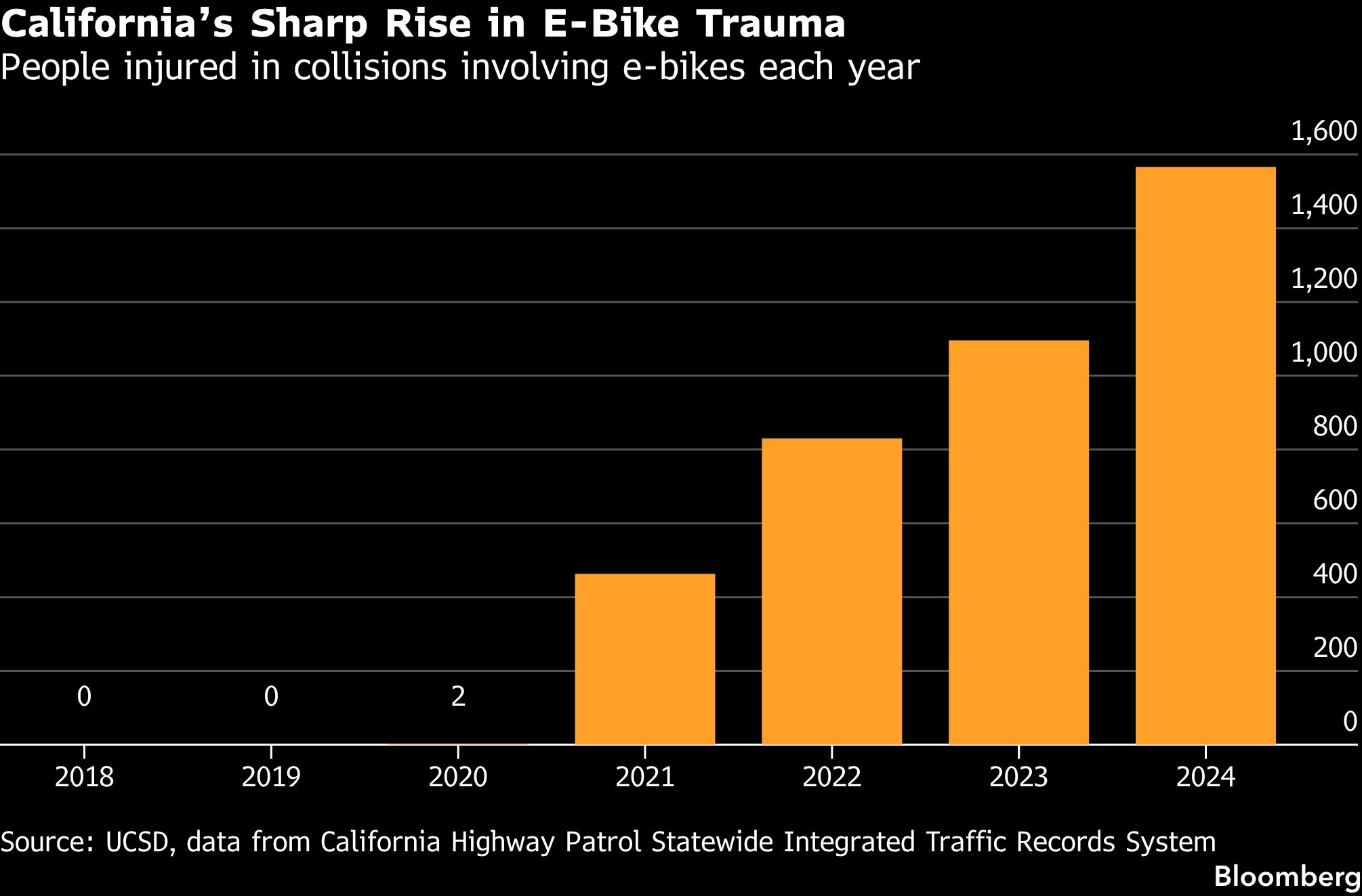
E-bikes were responsible for more than 155,000 emergency room visits from 2017 through 2024, as well as over 300 deaths, according to the US Consumer Product Safety Commission. In California alone, the number of injuries from e-bike collisions rose from two in 2020 to 1,566 in 2024, according to a study by the University of California, San Diego.
Government officials are now rushing to address the problem with age-related bans, licensing requirements and other restrictions. In July, New Jersey began implementing the toughest e-bike law in the nation, banning anyone under age 15 from using them. One California community even resorted to the type of buyback program more often used to get guns off the street.
The potential for tragedy is all too familiar to Allister Carlos, whose 15-year-old son, Ethan, was killed in an e-bike accident in La Habra, California, last year.
“These machines are really dangerous,” Carlos, who has started a foundation to honor his son’s memory, said in an interview. “It’s the next wave of epidemic, up there with guns and school shootings.”
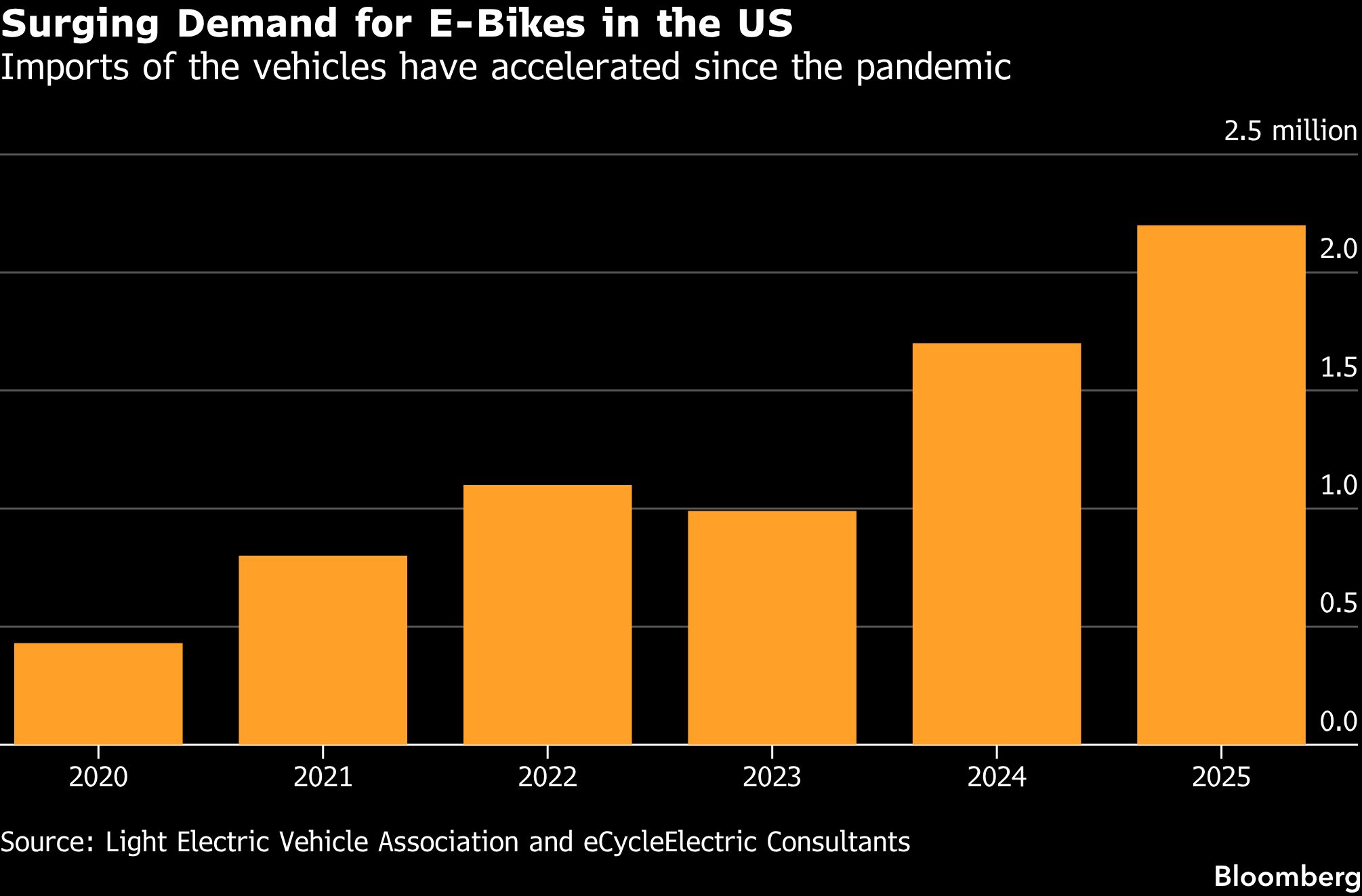
E-bikes have proliferated in the US in recent years, offering affordable transportation for commuters, delivery drivers and everyday enthusiasts. Spurred in part by rising interest in outdoor activities during the pandemic lockdown, US imports of e-bikes surpassed 1 million in 2022, according to an analysis by eCycleElectric. That figure topped 2 million last year.
They’re generally divided into classes based on capabilities, from Class 1, which just boosts pedal power, up to Class 3, which can travel as fast as 28 miles an hour. Bikes modified to go faster, along with e-motos and mini bikes with high-torque motors, are typically treated as motorized vehicles, similar to motorcycles, and are generally not legal to operate by those under 16 years old and without proper licensing.
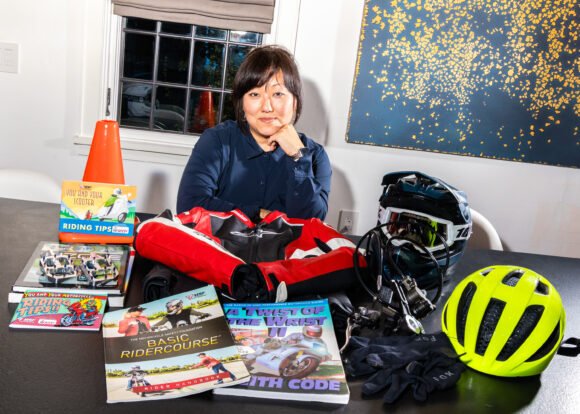
Katherine Echo Kim, a healthcare professional and experienced motorcycle rider in Southport, Connecticut, overcame her initial reservations and bought her son Miles an e-bike after he turned 13. She did extensive research. The two took an online class together and she and set up a course in a parking lot laced with cones to teach him to properly steer.
Kim and her husband even followed Miles on the street to ensure he was riding safely early on. Yet she still worries about how many young riders she sees without helmets and ignoring the rules of the road, she said. “Some of these kids have absolutely no training about e-bikes.”
The dangers are real. Rady Children’s Health in Orange County, California, has treated 156 pediatric e-bike crash patients so far this year, a sharp increase from just one in 2021.
Many e-bikes are often modified to increase power and speed. A 2025 study by San Jose State University showed around 90% of e-devices parked at Northern California schools didn’t appear to meet the legal e-bike requirements, with some having as much as eight times the normal power levels.
“Our orthopedic surgeons have seen types of fractures that they haven’t seen before,” said Laura Goodman, trauma medical director at Rady Children’s Health in Orange County. She wants more education on e-device safety and for riders to wear helmets specifically rated for e-bikes.
Cities and states are taking action to try to stem the fallout.
In September, Bloomfield Township, Michigan, voted for a sixth-month ban on kids younger than 16 riding e-bikes. Beginning in January, Illinois will mandate that riders of e-bikes that can travel faster than 28 miles per hour must have a driver’s license, title, registration and insurance.
New York City, where food deliveries via e-bike are common, is weighing 23 different pieces of legislation to rein in the vehicles. A recent City Council hearing lasted for hours as residents complained about delivery people on e-bikes and e-motos racing wildly on streets and sidewalks.
In California, the Orange County district attorney’s office turned to a community buyback to get the vehicles off the street. In September, it offered gift cards worth up to $1,000 to anyone who turned in e-bikes, e-scooters or e-motorcycles. Hundreds of people exchanged theirs, and many still donated the devices even after the gift cards ran out just two hours into the program.
Carlos, who now runs the Ethan Carlos Foundation to support young people, had been hesitant to speak out directly on e-bikes until he attended the Orange County buyback to share his son’s story. He began crying at the event thinking about how the devices being taken off the road could prevent further tragedies.
Carlos said he did not allow e-bikes in his house, and had no idea that his son and his friend had even left the house on a vehicle that wasn’t legal for riders under 16 for street driving. Ethan was the passenger on his friend’s Class 3 e-bike when it was rear-ended by a car, killing both boys.
“We didn’t know that they had a powerful motorbike like that, and the parents made the decision for us,” Carlos said. “They just sent off our son with no helmet, no protection at night.”
Orange County District Attorney Todd Spitzer’s office has criminally charged some parents in other incidents, including a father whose 12-year-old son was critically injured riding an e-bike he had unlawfully modified, and a mother whose 14-year-old son struck and killed an 81-year-old veteran while illegally riding an e-motorcycle. Law enforcement officials are also going after parents in states such as Arizona and Oregon.
Despite the risks, many parents say e-bikes offer their kids independence and need guardrails, not prohibition. The University of Michigan’s CS Mott Children’s Hospital recently surveyed parents of children 11 to 18 and found that while most supported e-bike safety regulations, such as helmet requirements and training, only 11% backed a full ban.
Christine Berube, a mother in suburban Maryland, was hesitant when her son first brought up getting an e-bike. She ultimately bought a Class 2 bike with a maximum speed of around 20 miles per hour.
“It gives him that ability to hop on and go to Chipotle and meet a friend,” she said.
“There are kids out there taking over the streets, popping wheelies,” she added. “There are many more that are not doing that stuff.”
Top photo: Katherine Echo Kim and the safety gear she purchased for her son. Photographer: Evan Angelastro/Bloomberg.
Was this article valuable?
Here are more articles you may enjoy.
 UIM Minimum Limits. A Coverage That May Not Pay?
  EU’s Insurance Watchdog Warns of Risks Tied to Extreme Heat
  Goldman Sachs Ensnared in EY Data Breach Earlier This Year
  Google Faces $3.2 Billion Damage Claims on Ad-Tech Monopoly
Want to stay up to date?
Get the latest insurance news
sent straight to your inbox.