

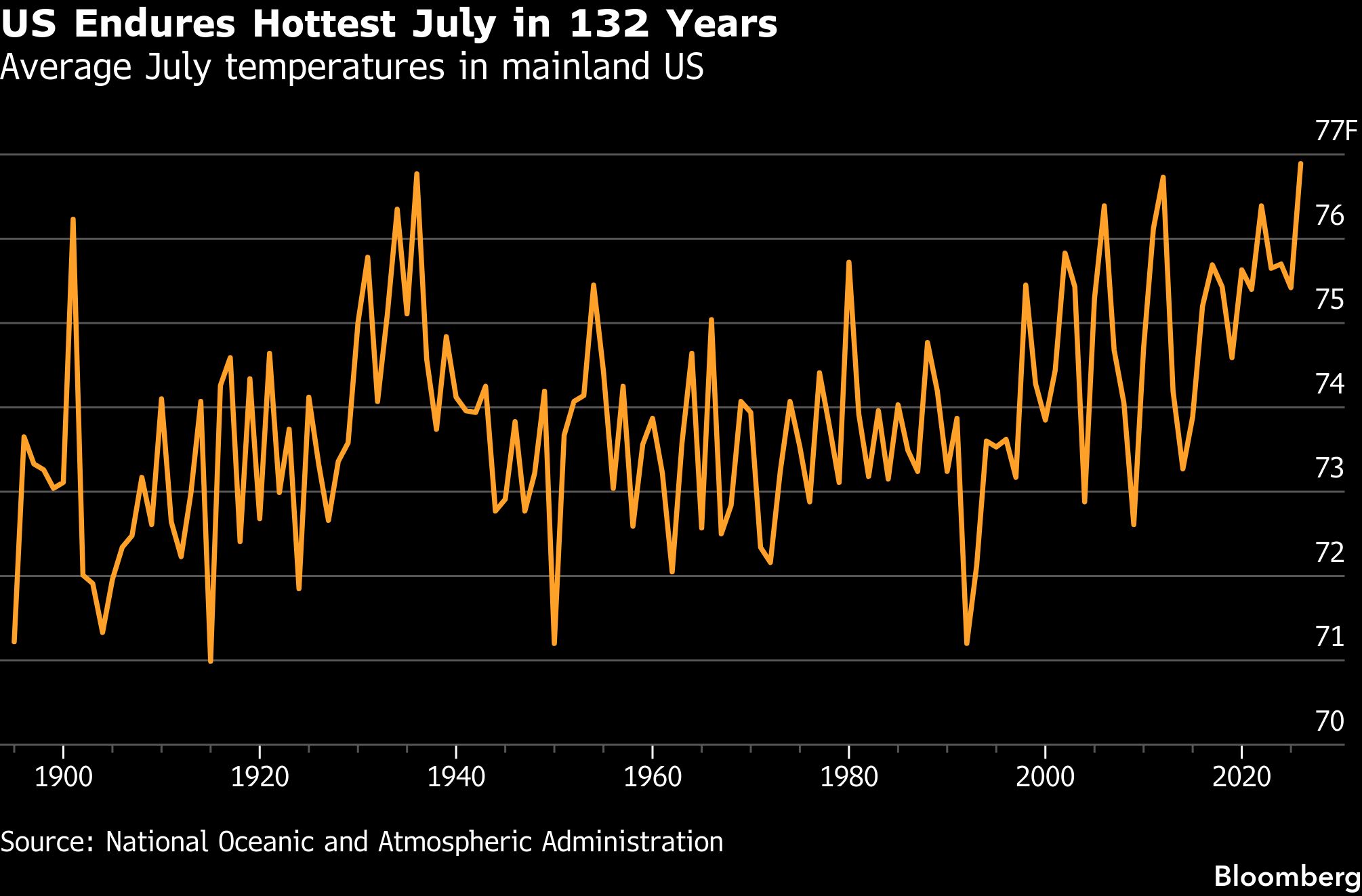
The U.S. just sweltered through the warmest month ever recorded. The average temperature for the U.S. mainland reached 76.9F (24.9C) in July, the National Oceanic and Atmospheric Administration said on Monday.
The US government has been tracking temperatures for 132 years. July’s average was around three degrees higher than the 20th-century average. It also exceeded the previous record set in July 1936 — during what’s known as the Dust Bowl — by about 0.1F, according to NOAA data.
“This is what we expect on a warming planet,” says Andrew Pershing, a climate scientist at the nonprofit Climate Central. “In a few years, this will feel like a cool July.”
The July record is the result of weeks of scorching temperatures in the U.S., including a heat dome over the July 4 holiday and sweeping heat warnings later that month. Europe, meanwhile, is facing its fifth major heat wave of the year this week, as climate change drives long-term increases in temperatures worldwide.
Scientists have shown that human-caused climate change can make heat waves more likely to happen, as well as more intense — including this summer. An attribution study by Climate Central analysts found that 43 cities had a week or more where global warming made those temperatures at least twice as likely to occur.
By contrast, the 1936 record was driven by different factors: Poor farming practices that stripped the land of vegetation, amplifying heat and drought, scientists say.
Last month also saw notably high average daytime temperatures, which reached 89.5F. Average overnight lows, meanwhile, were the hottest they’ve ever been, at 64.2F.
Central and southern areas in the U.S. are expected to see higher-than-average temperatures in August, the agency added, with the odds being greater than 50% for parts of coastal California and the southern Plains. And experts say El Niño could raise the risk of higher-than-normal temperatures in the coming months.
“The combination of massive heat domes, El Niño and climate change is a triple whammy,” Marshall Shepherd, director of the University of Georgia’s atmospheric sciences program, wrote in an email. “I wouldn’t be surprised to see more heat records fall before the year ends.”
Top photo: A pedestrian carries a fan during high temperatures in New York, on Friday, July 3, 2026. Bloomberg.
Was this article valuable?
Here are more articles you may enjoy.
 Slips, Trips And Falls: Why It’s Important to Get Ahead of An Incident
  Climate Science Under Political Attack Reaches US Supreme Court
  Goldman Sachs Ensnared in EY Data Breach Earlier This Year
  Hackers Tricked Asos Employee to Steal Work Account Login
Want to stay up to date?
Get the latest insurance news
sent straight to your inbox.