
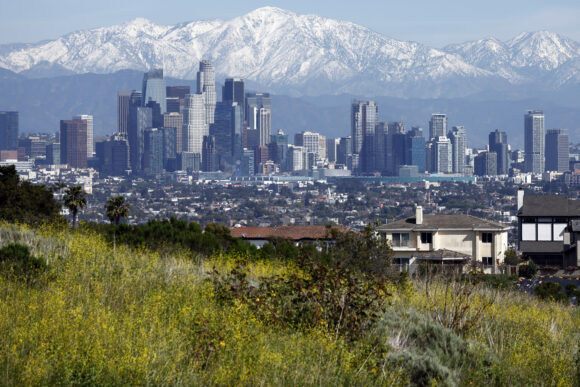
California is heading into its dry season with just a fraction of the snow it typically has across its highest peaks at the end of its winter months, raising the prospects of drought across the most populous U.S. state.
Statewide, California has just 18% of the snow a normal winter would bring to its mountains, according to the Department of Water Resources. The hardest-hit areas are in the northern Sierra Nevada range where just 6% of the normal snow was recorded, followed by the central region with 21% and southern region with 32%.
Related: LA Utility Taps Muni Market as Buyers Weigh Wildfire Legal Risk
Unlike the eastern U.S., California and many Western states receive most of their water between October and April before the dry season begins. The state measures its snowpack on April 1, traditionally the peak, to determine how much water will be available for residents, businesses, and agriculture. Snow at the highest elevations acts as a natural reservoir, holding water until it melts late spring and early summer.
The lack of snow may usher in drought across much of California, raising wildfire risks later in the year and further stressing crops and wildlife as resources dry up.
Related: ‘Nation’s First’ Smoke Damage Standards Bill Wending Through California Legislature
This year, most winter storms arrived warmer off the Pacific, bringing more rain than snow. That water filled lakes and reservoirs but did little to build a frozen reserve. The snowpack also peaked in late February and was then melted by record warm temperatures through March.
Top photo: The downtown skyline beneath the snow-capped San Gabriel Mountains in Los Angeles, California, on Feb. 23, 2026. Bloomberg.
Was this article valuable?
Here are more articles you may enjoy.
 Will California’s New Smoke Claims Law Create a Recovery Bottleneck?
  PG&E Warns of Possible Weekend Power Shutoffs Amid Windy Weather
  Anxiety Over Gas Prices Points to ‘Looming EV Comeback’ in US
  Prime London Homes Are Increasingly on Frontlines of Extreme Weather
Want to stay up to date?
Get the latest insurance news
sent straight to your inbox.