

Bayer AG Chief Executive Officer Bill Anderson’s effort to extricate the company from the years-long legal battles related to its Roundup pesticide is facing some skepticism from investors.
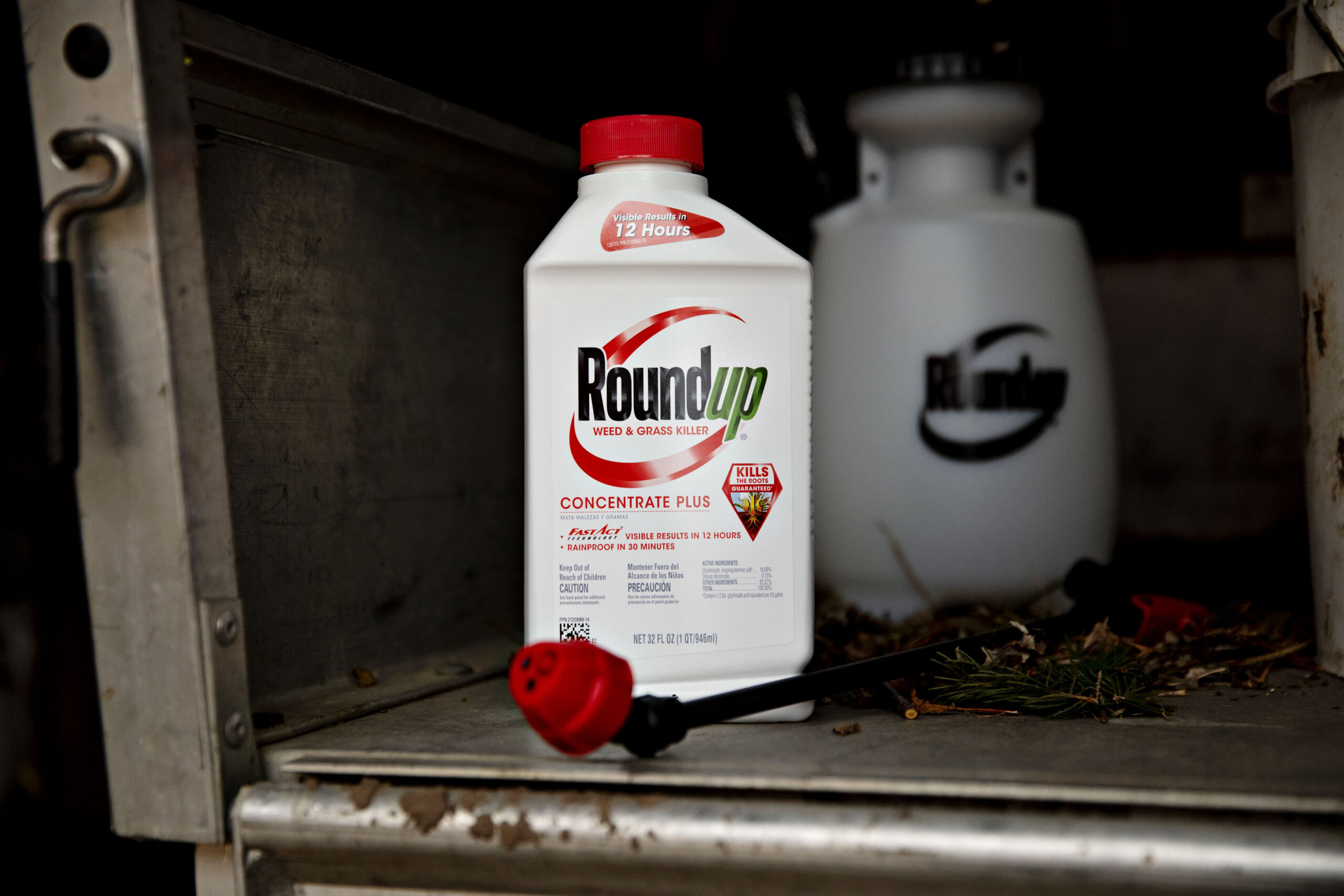
The German conglomerate’s proposed $7.25 billion class-action settlement in the U.S. announced late Tuesday to resolve most current and future claims that Roundup causes cancer — an allegation Bayer rejects but one that has haunted it since its $63 billion purchase of Monsanto in 2018 — initially sparked optimism.
But a cold-eyed look at the challenges the plan faces is prompting investors to pull back. After rallying 7.4% on Tuesday, shares reversed course, dropping as much as 12% on Wednesday, the steepest slide in over a year.
“This is not yet the breakthrough that many investors had hoped for,” said Markus Manns, portfolio manager at Frankfurt-based asset manager Union Investment, a Bayer investor.
The list of hurdles to the plan is long. For one, it remains contingent on court approval in Missouri. Class members can opt out, and Bayer has the right to terminate the agreement if participation falls short. Anderson has made clear the uptake needs to be “very close” to 100% participation for the framework to work.
The deal is also costly. Bayer raised its litigation provisions to €11.8 billion ($13.9 billion) and warned that free cash flow will likely be negative in 2026 as it fronts the largest payments. It has secured an $8 billion bridge loan facility to fund the upfront outflows and plans to refinance the debt through senior bonds and hybrid securities.
Anderson has a lot riding on the deal. The American took the helm of Bayer in mid-2023, tasked above all with finding a way to bring a close to the seemingly never-ending litigation that’s already cost the group north of $10 billion. He has vowed to largely contain the situation by the end of 2026 and is now arguing that the timing for a class-action solution is finally right. Bayer reached a point where plaintiff lawyers were willing to come to the table, he said, adding that the deal came after months of “difficult negotiations.”
“This is a move to liberate the company from the litigation burden so our people can dedicate resources to cell and gene therapies, drought-resistant seed hybrids, and better ways of taking care of everyday health,” Anderson said on an investor call Tuesday evening.
Anderson’s rhetoric echoes that of his predecessor Werner Baumann, who in 2020 unveiled a sweeping settlement meant to also address future claims — only for a federal judge to reject key elements, allowing litigation to continue.
“Proposing a settlement is different to getting one across the finish line, even if the current proposal appears well thought-out,” said Berenberg analyst Sebastian Bray. “I think the market may also be examining the potential for group higher interest costs resulting from the debt that may be used to finance a settlement.”
Bayer argues this time is different. The new proposal has a longer run time with 21 years and a larger funding pool. Anderson also has leverage from the upcoming US Supreme Court review — another difference from Baumann — which may drive more claimants to settle, according to Bloomberg Intelligence analyst Holly Froum.
Anderson said the settlement wouldn’t have been possible without the U.S. Supreme Court case. It’s also critical to cover major outstanding verdicts not addressed by the settlement.
The court agreed in January to review whether federal pesticide law shields Bayer from state-level failure-to-warn claims, the legal theory underpinning most Roundup lawsuits. Oral arguments are scheduled for April 27, with a decision expected by mid-year.
If the court rules in Bayer’s favor, the decision could undercut a substantial portion of claims — JPMorgan analysts estimate failure-to-warn cases account for roughly 80% of those filed. But if it rules against the company, the settlement alone may not be enough to prevent renewed litigation risk.
“Bayer is buying time, but without a favorable decision from the Supreme Court, a new wave of lawsuits could emerge in the coming years,” Manns said.
Beyond litigation, Bayer has seen a rebound under Anderson’s leadership, with shares doubling over the past 12 months. He has implemented an across-the-board cost-cutting program and radically slashed management layers.
The rebound in shares is also linked to improving prospects in the pharmaceutical business. While the division is grappling with generic competition for blockbuster blood thinner Xarelto, demand for kidney therapy Kerendia and cancer drug Nubeqa is strong. Bayer is also launching new growth drivers, including menopause drug Lynkuet, and it surprised the market with strong trial results for Asundexian — once seen as a failure.
Asked about whether Bayer’s conglomerate structure — which also includes the crop science and consumer health units — could be broken up, Anderson said in Tuesday’s call that for now he’s focused on dealing with litigation and “making Bayer the leanest, fastest life science company in the world.”
That said, he didn’t rule out an eventual look at the group’s composition.
“I can assure you we will be addressing the structure question in the future,” he said.
Top photo: Bill Anderson, chief executive officer of Bayer AG, at the company’s headquarters in Leverkusen, Germany, on Tuesday, Dec. 10, 2024. Bayer is in the midst of a turnaround led by Anderson, who wants to revamp the operations of the troubled conglomerate, which is bogged down by litigation linked to a weedkiller gained as part of the takeover of Monsanto. Photographer: Alex Kraus/Bloomberg.
Was this article valuable?
Here are more articles you may enjoy.
 Google Accused of Overcharging 20 Million Consumers in UK Class Action
  HSBC Executive Strikes Back in Court Fight Over Poaching Claims
  Report: Property Claims Face Delays, Are Growing More Complex
  UIM Minimum Limits. A Coverage That May Not Pay?
Want to stay up to date?
Get the latest insurance news
sent straight to your inbox.