
This year’s Atlantic hurricane season will be remembered for bursts of extreme weather intensity falling between long and quiet stretches with no tropical activity. It was also the first season without a U.S. hurricane landfall in 10 years.
That’s the summary for the season from AccuWeather out on Friday. Those storm patterns and exceptionally warm waters highlighted a 2025 Atlantic hurricane season that produced four storms that rapidly intensified, including three storms that underwent extreme rapid intensification before turning into Category 5 hurricanes.
AccuWeather estimates $55 billion to $61 billion in total damage and economic loss was caused by three storms this Atlantic hurricane season. Forecasters say there is near-zero risk of further tropical development in the Atlantic basin before the official end of the 2025 Atlantic hurricane season on Nov. 30.
Related: A Claims Professional’s View From the Ground in Melissa’s Aftermath
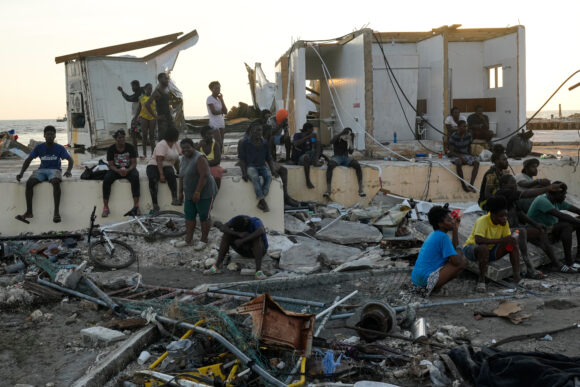
That would make Hurricane Melissa the final hurricane of the season. The late October hurricane was the deadliest and most destructive storm of the year, bringing. catastrophic wind damage, storm surge, and flooding to Jamaica and flooding and damage across the western Caribbean.
The Category 5 hurricane made landfall in Jamaica on Oct. 28, the strongest recorded storm to directly hit the country, and the first major hurricane to hit Jamaica since 1988. The catastrophe affected millions across Cuba, Haiti, Jamaica, and the Dominican Republic, resulting in 76 deaths and displacing more than 770,000 people.
Melissa caused catastrophic damage to Jamaica, particularly in the western and southern coastal regions. The eyewall hit the south coast with winds estimated at roughly 125 mph, ripping roofs off buildings, breaking countless power lines and decimating crops and infrastructure. Most (70%-plus) electricity customers in Jamaica were left without power, and many areas remained without power for an extended time.
Insured losses from the storm’s impact on Jamaica are expected to range between $2.2 billion and $4.2 billion, according to estimates from data analytics firm Verisk. Catastrophe modeler KCC estimates privately insured losses from Melissa will reach $2.4 billion. That estimate includes insured damages to residential, commercial and industrial properties in Jamaica and Cuba.
Jamaica’s $150 million cat bond was triggered by the “black swan” event. According to a Bloomberg report, in addition to the $150 million it will get from its cat bond, it can tap $300 million in contingent credit from the Inter-American Development Bank and draw a $92 million payout from a parametric insurance program.
Related: Lack of Hurricanes Is Leading to Lack of Experience for Adjusters
Gallagher Re has said it expects Melissa to be a billion-dollar-plus event for reinsurers.
“The uncertainty around the potential industry impact and limited cat model performance in the Caribbean makes this a challenging event to estimate without seeing some hard data,” said Steve Bowen, chief science officer at Gallagher Re. “Our current expectation remains low single digit billion insured loss, including payouts from the Jamaican cat bond and parametric TC policy from CCRIF. The economic loss will be much higher, and combined with impacts outside of Jamaica, is expected to approach $10 billion.”
AccuWeather’s $55 billion to $61 billion economic loss total is one-eighth of last year’s catastrophic total. The U.S. incurred $7 billion to $9 billion in estimated total damage and economic loss, 2% of 2024’s devastating total of $457 billion to $506 billion, according to the weather service.
Top photo: People gather among debris near a bridge in Black River, Jamaica, Oct. 30, 2025, in the aftermath of Hurricane Melissa. (AP Photo/Matias Delacroix, File).
Was this article valuable?
Here are more articles you may enjoy.
 Storm Austen Knocks Out Power to Nearly 300,000 French Homes
  Bank of England Considers Stress Testing AI’s Effect on the Financial Sector
  Money Managers Say There’s Nowhere to Hide as Super El Niño Forms
  Uber Wins Bid to Dismiss £250 Million Black Cab Driver Suit
Want to stay up to date?
Get the latest insurance news
sent straight to your inbox.