
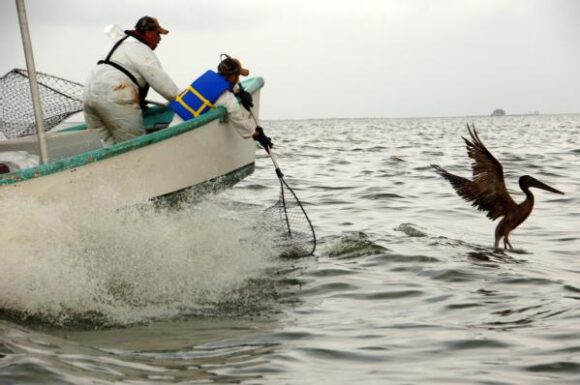
The Government Accountability Office says more research is needed on possible environmental problems that could result from using dispersants to break up an oil spill, as BP PLC did after the disastrous 2010 spill in the Gulf of Mexico.
The Advocate reports that the GAO issued its report Friday and found not much testing had been done on dispersants before they were used in the Gulf.
The GAO was asked to investigate the use of dispersants following BP PLC’s catastrophic April 2010 oil well blowout that killed 11 workers and caused the nation’s largest offshore spill.
To combat the spill, BP was allowed to spray dispersants on the Gulf to break up the oil. The use of dispersants has been controversial.
The GAO report said 1.84 million gallons of dispersants were used and 771,000 gallons were sprayed deep underwater at the wellhead.
The report said federal agencies have spent more than $15.5 million on research involving dispersants since 2000, but that few of those studies looked at the effects of using dispersants underwater or in the Arctic Ocean.
“Little or no prior testing had been done on the effectiveness and potential adverse environmental consequences of a subsea dispersant use, let alone at those volumes,” the GAO report said.
The report recommended conducting more research into the use of dispersants below the sea and in the Arctic environment.
Was this article valuable?
Here are more articles you may enjoy.
 Will California’s New Smoke Claims Law Create a Recovery Bottleneck?
  San Diego Sues AppLovin Over Explicit Ads Shown to Kids’ Devices
  Hackers Tricked Asos Employee to Steal Work Account Login
  Recovery Starts Before the Loss: What Claims Professionals Know About Severe Weather Preparedness
Want to stay up to date?
Get the latest insurance news
sent straight to your inbox.