
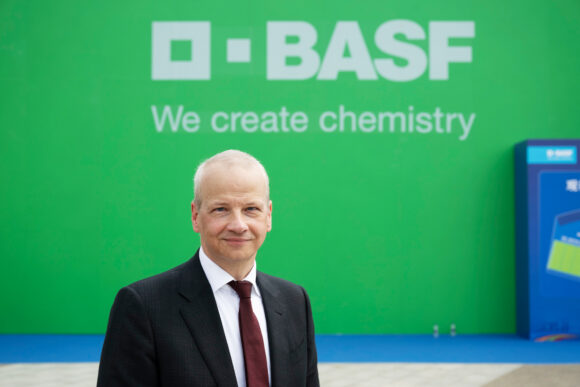
BASF SE Chief Executive Officer Markus Kamieth said rising inflation and the risk of supply-chain disruption from the U.S.-Israeli conflict with Iran have darkened the outlook for both the auto sector and the broader economy.
Shortages of materials are becoming more likely and could halt tightly run supply chains such as car production, Kamieth said at a gathering for journalists in Frankfurt. The conflict is already contributing to a scarcity of inputs like sulfur and helium, he added.
Related: Why Toyota RAV4s Are Suddenly the Most Coveted Used Cars in America
BASF is a major supplier to the global auto industry, making coatings, plastics, catalysts, battery materials and other chemicals used by carmakers and their suppliers. Shortages of basic inputs could raise the risk of assembly-line stoppages in an industry that depends on thousands of components from multiple sources.
“That’s a downside risk that I can see for the second half of this year,” Kamieth said. “There is this creeping risk that at some point a material won’t be available.”
The comments highlight the challenge facing policymakers and companies as they try to gauge the fallout from the Middle East war. Purchasing teams at Volkswagen AG, Mercedes-Benz Group AG and other automakers are trying to mitigate the impact, but disruptions can be difficult to detect when they begin far upstream in chemicals, metals or other basic materials.
Ludwigshafen, Germany-based BASF, one of the world’s largest chemical companies, operates sites across the globe, making it relatively sensitive to geopolitical shocks. Its European plants are tied closely to the region’s automotive supply chains, while the company has also recently opened a major new production complex in China.
Kamieth said he doesn’t believe China or the U.S. want to trigger a conflict over Taiwan, and that a complete Western decoupling from China would be impossible even in the event of a confrontation over the disputed territory.
Bloomberg Economics estimated this week that a war over Taiwan would cost the world economy about $10 trillion, or roughly 8% of global GDP.
“Sanctions would come, countermeasures would come,” Kamieth said, while pushing back on comparisons with Russia’s invasion of Ukraine and the response of western economies with financial countermeasures. “Russia is economically a mini-mini effect compared to China,” he said.
Top photo: Markus Kamieth Photographer: Gilles Sabrié/Bloomberg.
Was this article valuable?
Here are more articles you may enjoy.
 HSBC Executive Strikes Back in Court Fight Over Poaching Claims
  Recovery Starts Before the Loss: What Claims Professionals Know About Severe Weather Preparedness
  Goldman Sachs Ensnared in EY Data Breach Earlier This Year
  Anxiety Over Gas Prices Points to ‘Looming EV Comeback’ in US
Want to stay up to date?
Get the latest insurance news
sent straight to your inbox.