
Hyundai Motor Co. is preparing to increase the price of all of its U.S. vehicles as the automaker looks to cushion the blow from tariffs imposed by President Donald Trump, according to people familiar with the matter.
The South Korean manufacturer is considering a 1% increase to the suggested retail price of every model in its lineup starting as soon as next week, said the people, who asked to not be identified discussing the plan because it isn’t public. The move would apply to newly built vehicles, leaving cars already sitting on dealership lots unaffected.
In addition, the company is likely to raise shipping charges and the fees for options such as floor mats and roof rails that are installed before cars arrive at retailers to avoid further raising the base price of its vehicles, the people said, cautioning that discussions are ongoing and could still change.
Hyundai said its pricing strategy is designed to ensure it remains competitive, but that no final decisions have been made.
“This period marks our regular annual pricing review, guided by market dynamics and consumer demand, independent of tariffs,” the company said in a statement. “We will continue to adapt to shifts in supply and demand, and regulations, with a flexible pricing strategy and targeted incentive programs.”
The move would be one of the most sweeping actions taken by an automaker in response to the steep tariffs Trump has imposed on imported cars and parts. Hyundai, among the top auto sellers in the US, had previously pledged to hold prices steady until June 2 for its namesake brand and the upscale Genesis line.
Hyundai Chief Executive Officer José Muñoz told Bloomberg last month that he didn’t anticipate a sudden, large jump in prices but didn’t say what was planned for later in the year.
The price hike and higher fees would add several hundred dollars at least to each of its vehicles.
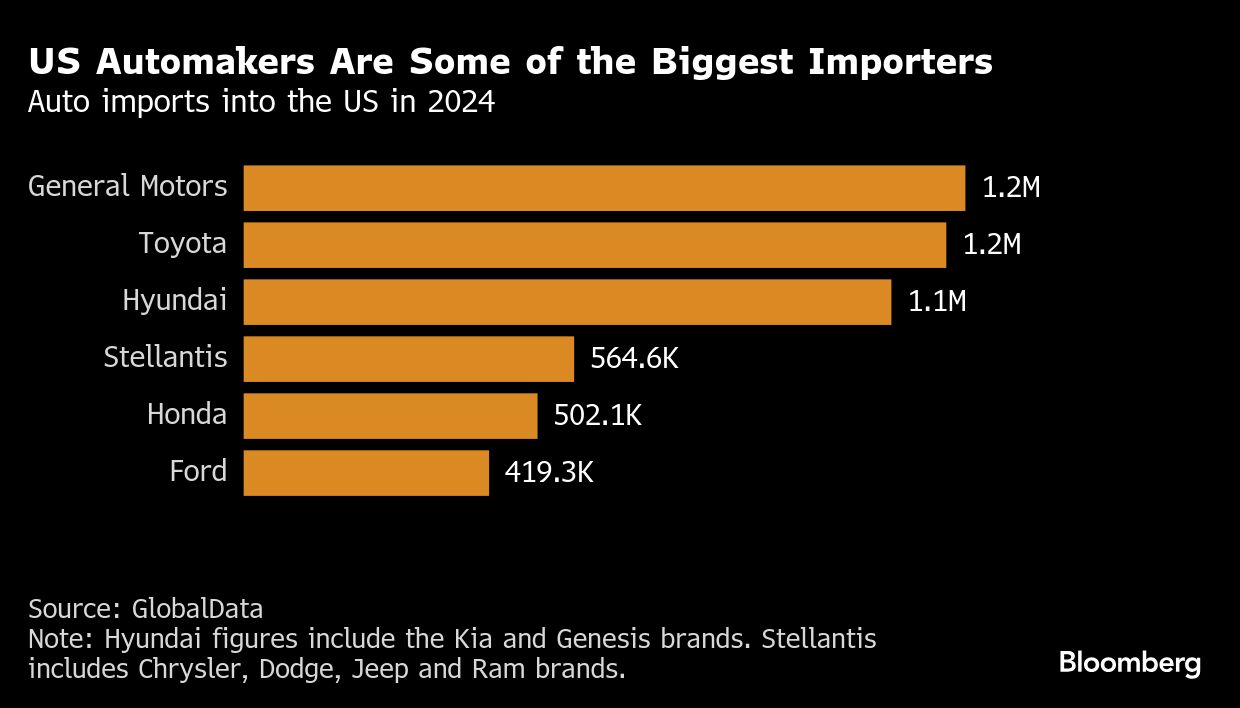
Despite having large assembly plants in the U.S., Hyundai Motor Group is one of the largest importers of finished vehicles in the country. Including its Kia and Genesis affiliate brands, Hyundai brought about 1.1 million vehicles into the US last year, trailing only Toyota Motor Corp. and General Motors Co., which each imported roughly 1.2 million cars.
Hyundai Motor Group revealed plans in March to make a record $21 billion investment in the US to localize more parts and vehicle production, including a new steel plant in Louisiana and an expansion of its new assembly plant in Savannah, Georgia. At full capacity, the investments will allow Hyundai and Genesis to make 70% of what they sell in the US at domestic plants, Muñoz has said.
Hyundai Chairman Chung Euisun visited Trump at the White House to mark the announcement, which was hailed by the president. But it has not led to much tariff relief for the automaker or South Korea.
Carmakers have been slow to increase prices even as industry leaders have warned that the tariffs risk adding thousands of dollars in additional costs to each vehicle.
Ford Motor Co. has raised prices on three models it imports from Mexico, while several other carmakers have pulled their financial targets due to global trade instability. Subaru of America confirmed earlier this month that it has also raised prices on U.S. vehicles.
Was this article valuable?
Here are more articles you may enjoy.
 Climate Science Under Political Attack Reaches US Supreme Court
  Report: Property Claims Face Delays, Are Growing More Complex
  Google Faces $3.2 Billion Damage Claims on Ad-Tech Monopoly
  Prime London Homes Are Increasingly on Frontlines of Extreme Weather
Want to stay up to date?
Get the latest insurance news
sent straight to your inbox.