
Researchers at The Children’s Hospital of Philadelphia’s Center for Injury Research and Prevention studied nearly 1,000 1- to 8-year-old children involved in crashes and found no evidence of increased injury risk for overweight children. The results are published online in the December issue of the journal Pediatrics.
The research suggests the current range of child safety seats and booster seats available today sufficiently accommodates a broad spectrum of children’s body sizes, including children with higher weights.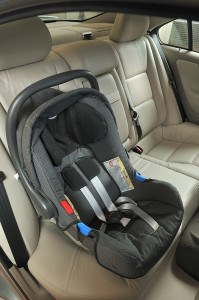
“Given that nearly 32 percent of children in the United States are categorized as overweight or obese, and motor vehicle crashes are the leading cause of death and injury for all children, we wanted to better understand how these two threats to children’s health interact,” explained lead author Mark Zonfrillo, MD, MSCE, an attending emergency physician at The Children’s Hospital of Philadelphia.
Current American Academy of Pediatrics (AAP) guidelines, revised earlier this year, say that children should remain rear-facing until at least age 2 or until they reach the rear-facing height and weight limit for the car seat. Once forward-facing, children should stay in a five-point harness until they reach the manufacturer’s height and weight limit for that seat. They should then move to a belt-positioning booster seat, where they should remain until they are 4’9″ tall, usually between ages 8 and 12.
Source: The Children’s Hospital of Philadelphia’s Center for Injury Research and Prevention
Was this article valuable?
Here are more articles you may enjoy.
 Climate Science Under Political Attack Reaches US Supreme Court
  UIM Minimum Limits. A Coverage That May Not Pay?
  TikTok Accused by NY of Running Secret Safety Tests on Teens
  Anxiety Over Gas Prices Points to ‘Looming EV Comeback’ in US
Want to stay up to date?
Get the latest insurance news
sent straight to your inbox.